Showing posts with label Women's Rights. Show all posts

Tuesday, 8 July 2014

Striving for Gender Justice: Overcoming Obstacles

Ram Puniyani

While on one hand a PIL has been filed for UCC, there is another significant development in this direction. This relates to the personal laws of Muslim community. That ‘Muslim women are subject to more domination and gender injustice’ has been a widespread perception. While as such the Personal laws of different religious communities are not giving due justice to women, the popular focus is mainly on the Muslim community. This despite the fact that there are number of Muslim women’s groups who are striving for gender just civil codes within Muslim community. The recently released Nikahnama (Marriage Norms) by Bhartiya Muslim Mahila Andolan (BMMA) is one such leap by Muslim women to overcome the shackles of patriarchal grip on the Muslim women.  Model Nikahnama released by BMMA (June 23, 2014) is an important step in this direction, in the direction of empowering Muslim women This tries to give the solution to various problems faced by Muslim women. It outlines the various steps for which the large section of Muslim women is longing for. 

This Nikahnama calls for registration of all marriages, calls for denial of second marriage unless there is a valid ground like death of the first wife etc, calls for minimum age of marriage for girls to be 18, (for boys 21), wife should have due place in the household even after the death of husband, divorce should be permitted in the physical presence of husband and wife both and it should be supported by legal documents, and in case of women demanding divorce, her voice should be respected and she should be allowed to keep personal belongings.

The notion that the present plight of Muslim women is due to Islam holds no water. Islamic scholars and reformers like Asghar Ali Engineer contributed tremendously to the many basic points of this Nikahnama, which is a sort of Muslim Personal Law. The major highlight of this draft is that it represents the opinions of thousands of Muslim women due to whose participation the drafting of this one took final shape. The future challenge is that this Nikahnama has to be made the basis of the personal laws and a major campaign has to be launched in support of this. While the directive principles of our Constitution call that state should attempt to evolve a Uniform civil code, the issue as such came to the forefront in the wake of historic Shah Bano judgment, where a Muslim divorcee women was granted the maintenance by the court. The opposition to this court judgment came from the orthodox section of the community and the judgment was reversed by an act of Parliament by Rajiv Gandhi Government. This was a serious mistake.

The women’s movement has been asking for gender justice and many a concerned groups have been struggling for this. As we know the personal laws have been a continuation of what British had introduced and pertain only to marriage, divorce, custody of children and inheritance. While the civil and criminal laws are the same for all the religious communities, the personal laws have been based on the traditional customs, primarily patriarchal. The severe flaw in these laws is that they are heavily weighted in favor of men. While initially there was some lack of clarity about the concept of Uniformity, the women’s movement in due course called for gender justice as the basis of these rather than mere uniformity.

Uniformity can very well be an amalgam of unjust laws picked from different traditions and put together. That’s not something which women’s movement wants, that’s something which is not in consonance with the concept of gender parity. That’s not what a civilized society should have. The twin aspect of the need for newer personal laws has been the gender equality in front of law and their introduction through a process of social reform rather than imposition by dictat from the top.

The efforts of Muslim women’s groups face obstacles due to the domination of orthodox elements in the community. This situation is worst confounded due to the sense of physical insecurity following the communal violence. During last several decades the percentage of Muslims getting killed in the communal violence is close to 90%, while their percentage in the population is close to 14%. Communal violence is also the ground where women from minority community are subjected to serious sexual and physical abuse. This is what creates the sense of social insecurity, weakening their movements in a serious manner. It’s not that Muslim women don’t want reforms or parity in social matters; it’s not that Muslim men are able to hegemonize the situation due to religion or due to what Koran says. The issue at stake is the physical insecurity due to which Muslim women’s groups have remained comparatively weak and unable to assert themselves within the community and society. There surely are number of groups from amongst the Muslim community asking for equality, their movement is unable to get strength due to the cancerous phenomenon of communal violence and its soial-psychological aftermath.

The Hindu right wing’s cry for Uniform Civil Code (UCC) is not because it is seeking for gender parity. It has been seen that this UCC can be used as a political tool to beat the Muslim community with so it has been made as a basic part of the so-called ‘Hindutva’ agenda. This also needs to be seen from another angle. As a matter of fact the term Uniform has to qualified in proper perspective. It should not be a compilation of different unjust laws from different religious customs. What we need is an overhaul of the personal laws in all the religious communities and that the new laws have to be formulated on the grounds of gender justice. And secondly, they have to be evolved through the process of discussion and debate within the communities, where the women, who are the major sufferers of the prevalent laws, should have a major role in formulating them.

The step by BMMA shows the way for the communities to march in the direction of change in personal laws. On one hand this Nikhnama has been evolved through an extensive process of community participation, on the other it articulates the aspirations of Muslim women at large. Surely the laws pertaining to other religious communities also need to go through the process of similar exercise where women have a major say and the laws then act as a major mechanism for overcoming the patriarchal norms on the society.  Such positive steps by social groups need a welcome modification to further broader participation to make it more representative in character.       

Thursday, 17 January 2013

India’s Rape Culture:‭ ‬Urban versus Rural

Ram Puniyani

While the horrific rape of Damini,‭ ‬Nirbhaya‭ (‬December16,‭ ‬2012‭) ‬has shaken the whole nation,‭ ‬and the country is gripped with the fear of this phenomenon,‭ ‬many an ideologues and political leaders are not only making their ideologies clear,‭ ‬some of them are regularly putting their foots in mouths also.‭ ‬Surely they do retract their statements soon enough.‭ ‬Kailash Vijayvargiya,‭ ‬a senior BJP minister in MP’s statement that women must not cross Laxman Rekha to prevent crimes against them,‭ ‬was disowned by the BJP Central leadership and he was thereby quick enough to apologize to the activists for his statement.‭ ‬But does it change his ideology or the ideologies of his fellow travellers‭? ‬There are many more in the list from Abhijit Mukherjee,‭ ‬to Mamata Bannerji,‭ ‬Asaram Bapu and many more.‭

Mohan Bhagwat
The statement of RSS supremo,‭ ‬Mohan Bhagwat,‭ ‬was on a different tract as he said that rape is a phenomenon which takes place in India not in Bharat.‭ ‬For India the substitute for him is urban areas and Bharat is rural India for him.‭ ‬As per him it is the‭ “‬Western‭” ‬lifestyle adopted by people in urban areas due to which there is an increase in the crime against women.‭ “‬You go to villages and forests of the country and there will be no such incidents of gang rape or sex crimes‭”‬,‭ ‬he said on‭ ‬4th January.‭ ‬Further he implied that while urban areas are influenced by Western culture,‭ ‬the rural areas are nurturing Indian ethos,‭ ‬glorious Indian traditions.‭ ‬As per him ancient Indian traditions gave great respect to women,‭ ‬and it is due to these values of Indian tradition,‭ ‬that villages are free from crimes against women.‭

The statistics from India fly in the face of Bhagawat.‭ ‬In a significant statistical observation and study of rape cases Mrinal Satish,‭ ‬faculty member of National Law University,‭ ‬Delhi,‭ ‬tells us another tale.‭ ‬He has used the court data and observes that‭ ‬75%‭ ‬of rape cases take place in rural India.‭ ‬His observations are based on the cases reported in Criminal Law Journal from‭ ‬1983‭ ‬to‭ ‬2009.‭

The cases of rape in villages,‭ ‬like that of Khairlanji and rape against Adivasi women may not be on the radar of the Hindutva boss,‭ ‬Bhagwat,‭ ‬but those engaged with the issues of dalits,‭ ‬Adivasis and gender issues cannot buy the simplified rural versus urban divide.‭ ‬One knows that patriarchy which looks at women as secondary beings,‭ ‬primarily as sister,‭ ‬mother or daughter,‭ ‬rather than a person in her own right.‭ ‬She is not a being with swayam‭ (‬selfhood‭) ‬of her own.‭ ‬As for as RSS ideology is concerned only men have swayam‭ (‬selfhood‭)‬.‭ ‬The full form of RSS,‭ ‬the male organization is Rashtriya Swayamsevak Sangh while its women’s organization is Rashtrasevika Samiti,‭ ‬do note that the word swayam is missing here,‭ ‬in the name of women’s organization.‭ 

The myth that women had a place of honour in ancient Indian period is a well constructed one.‭ ‬During the long span of ancient Indian period the status of women kept changing,‭ ‬but women being subordinate beings was the running theme.‭ ‬During the Aryan period of pastoral life the women were supposed to commit symbolic self immolation after the death of husband,‭ ‬later this got converted to actual burning of the widows.‭ ‬It is probably around this period that two great epics were written,‭ ‬Ramayan and Mahabharat.

In Ramayan Lord Ram banishes his pregnant wife Sita,‭ ‬because of the rumours about her character amongst the subjects of Ayodhya.‭ ‬In Mahabharat,‭ ‬the Panadavas use their common wife Draupadi as a‭ ‘‬thing‭’ ‬and use her as a bet in gamble.‭ ‬Not to be left behind their cousins try to disrobe her in the court in front of the King Dhritrashtra‭! ‬So much for the glorious place of women in ancient India‭! ‬Later period’s values are well reflected in Manusmiriti,‭ ‬where the women were explicitly denied education and serving the husband and household chores were regarded as equivalent of education for the women.‭ ‬Manusmriti gives the detailed code for women and it leaves no doubt about women being subordinate or the property of men.‭ ‬The Gupta period‭ (‬3rd to‭ ‬7thCentury‭)‬,‭ ‬which is regarded as the Golden Period of Ancient India,‭ ‬the women were having limited access to education and barring few names which are dished out to prove the glorious condition of Hindu women,‭ ‬mostly the women were having limited access to education.‭ ‬Their participation in Yagnas was secondary to husband,‭ ‬the Yajman,‭ ‬who was the primary being who had solicited the priest for the Yagnas.‭ ‬Yajnman word interestingly has no female equivalent.‭

The ideologues of the Mohan Bhagwat parivar attribute all the prevalent ills to the coming in of Muslims.‭ ‬This is a very clever ploy to externalize the internal suppression of women,‭ ‬and also of dalits.‭ ‬It’s not too long ago in history that during British rule,‭ ‬the continuation of this religiously sanctioned Hindu norm,‭ ‬Sati,‭ ‬had to be fought against by social reformers.‭ ‬The ghastly sati system,‭ ‬occasionally surfacing even now,‭ ‬and supported subtly by conservatives has not been easy to eradicate as religion was cited as the argument for preserving it.‭ ‬In the wake of sati of Roopkanwar in‭ ‬1986,‭ ‬BJP’s Vice President Vijaya Raje Scindia,‭ ‬not only defended the sati system but also took out a morcha to oppose passing of the bill against sati.‭ ‬BJP of is the political child of RSS.‭

The travails of Raja Ram Mohan Roy in struggling against Sati system are a legend.‭ ‬The child marriage was/‭ ‬is another such evil.‭ ‬While British wanted to bring in the law in early twentieth century to abolish child marriage,‭ ‬the argument to oppose it came from the sources of Hindu religion.‭ ‬It was asserted that as per Hindu norms the girl must be married before her first menses,‭ ‬Garbhadhan.‭ ‬It was argued that our religion’s norm about early marriage cannot be violated.‭ ‬The introduction of widow remarriage,‭ ‬the struggle to abolish Devadasi system,‭ ‬each of these has a long and painful story to tell about the status of women in India,‭ ‬in Ancient India,‭ ‬not influenced by modernization.‭

The education is the key to the empowerment of women and an integral part of democratization process.‭ ‬It was a painful journey and the efforts of Savitri bai Phule in this direction are revolutionary in the true sense of the word.‭ ‬These efforts were downright opposed on various grounds,‭ ‬the main obstacle being the Hindu traditions.‭

As such what is being criticized by Bhagwat as modernization is basically the process of democratization of society.‭ ‬This gentleman is stuck in the feudal mode thinking and is upholding feudal of social relationships in the garb of Hindu glorious traditions.‭ ‬As per these traditions‭; ‬caste and gender hierarchy rules the roost.‭ ‬The atrocities against women are not due to democratization,‭ ‬which this worthy is calling modernization or westernization.‭ ‬The core of modernization is caste and gender equality.‭ ‬The essence of modernization is abolition of hierarchy,‭ ‬based on birth-the hierarchy of caste and gender.‭ ‬The process of democratization is the march of society from formal values of equality to substantive equality,‭ ‬and this the march has to be the agenda of social movements.‭ ‬The roots of oppression of women lie in the patriarchal values,‭ ‬which is the carry forward of ancient and medieval values,‭ ‬related to feudal society,‭ ‬society with the rule of kings,‭ ‬where woman was regarded as the one whose arena is the domestic work.‭ ‬The condition of widows and the women who were burnt alive as sati reflects the glorious ancient tradition to which Mr.‭ ‬Bhagwat wants to push back the Indian society,‭ ‬undoing all what Indian society has been able to achieve through the struggle for Independence,‭ ‬which was not merely a struggle to throw away the British rule but also a struggle to do away with caste and gender hierarchy.‭

For Bhagwat,‭ ‬the ancient glory is a cover to hide the gender inequality.‭ ‬Modernization is seen in a superficial way by many.‭ ‬Here the ancient traditions are glorified without going to the core of the social relationships.‭ ‬One is not criticizing the past,‭ ‬but understanding it in the context of the social milieu,‭ ‬the system of production,‭ ‬the level of education etc.‭ ‬is what is needed.‭  ‬Blind glorification of the past or blind condemnation of the past,‭ ‬both take the conclusions off the mark.‭ ‬To look down upon modernization as a crass process is a deliberate one,‭ ‬to try to bring in social equations,‭ ‬the epitome of which in a way is Manusmriti.‭

Here even the facts of statistics are being put upside down to prove a political point which is retrograde but covered in the cloak of ancient glory.‭ ‬The borderline between India and Bharat is not an iron wall,‭ ‬it is a fluctuating zone,‭ ‬merging and separating in a very fluid way.‭ ‬The need of the hour is to look deeper into the issue of violence against women.‭ ‬While all needs to be done to create a safe atmosphere,‭ ‬women’s safety and space for their work and creativity,‭ ‬we need to give a look at the social movements to overcome the chains of patriarchy,‭ ‬which is at the root of violence against women.‭

Thursday, 3 January 2013

Preventing Crimes against women: are Stringent Laws the only Solution?


Ram Puniyani

The death of the Delhi gang rape victim in Singapore (Dec 28, 2012) has created a massive wave of anger and protest. As such after this ghastly act, which took place nearly two weeks ago, the anger and protest of the people came to the streets and one witnessed the unfortunate police action. This gang rape was so horrific that the attention of the people from all the sectors of society was drawn to it, and the rage amongst people was limitless. One cannot describe enough the brutality of this act, which took place in the moving bus in Delhi. The first object of people’s wrath was the Government and the police for their failure to prevent such acts, their inability to prevent such acts and lack of strong laws and for inability to put in place the mechanism for early punishment of the guilty, which can act as the deterrent to such heinous crimes in future. The first demand of protesters was that the guilty should be hanged.

Surely this massive unrest will force the authorities and society to initiate moves which should lead to the better and stronger laws and better norms for policing. One hopes this alone will not be the end of the social and political response to the protest of the people. One has to recognize that punishing the guilty, making stronger laws will merely be addressing the symptoms. The better path will be that in due course the grief of the event should be channelized to look at the phenomenon of rape and sexual violence against women at deeper level. In turn this should lead to efforts to create better social values and atmosphere where women can enjoy equal status and overcome the present chains of patriarchy. It is this prevalent patriarchy which is at the root of looking at women as subordinate secondary beings, who should submit to the wishes of stronger sex. The patriarchal mind set is at the root violence against women.

Today the whole response to the violence against women has to face the obstacle of biased processes, starting from the attitude society, apathetic and sometimes hostile response of the police and the attitude of a large section of judiciary. It goes without saying that all those who have to deal with the crimes against women need to be gender sensitized. Rape as such is a part of the attitude which regards women as secondary beings or worse the property of men. This is what was structural in feudal society. The transition from feudal society to the democratic society is half way arrested in India and during last three decades or so this transition for equality of both sexes has taken a beating with the rise of politics in the name of religion. This ascendance of politics in the name of religion has an all out impact on our system, the culture, the values and social thinking. This ascendance of ideology which, treats women as secondary beings has many negative aspects inbuilt into it.  

At global level Islam has been demonized by US for the goals of control on oil wells, America’s promotion of obscurantist versions of Islam and ultraconservatism in Islam, its propping up of Al Qaeda and coining of the word ‘Islamic terrorism’ has boosted the retrograde forces in Muslim societies. The arrested secularization process supplemented by this political process has promoted patriarchy in many Islamic societies.

On similar grounds the bringing in of religion in political space in India, the coming up Ram temple movement and consequent politics in the name of Hindu religion has also triggered the pushing back of struggles related to gender justice and equality of sexes. As such in India, the rape of Mathura, an Adivasi girl in police custody in late 1970s gave an impetus to the women’s movement which came up as a strong phenomenon raising the issues related to women’s equality, their yearning for half the sky, their aspirations for a world where they are not just confined to Kitchen, Church and Children but are also a part of the full social space in its entirety, the arena of production and creativity. Later women’s movement also engaged itself with the issue of rape of Manorama by army personnel.

In the transition phase from feudal set up to struggle for democratic society many an ideologues who were opposed to this transition did put forward their ideas which regarded women as the property of men. While those for democratic values encouraged women’s equality, those stuck to feudal values, presented their norms under the wrap of religion and opposed the values of gender equality in various forms. The communal politics which developed in India had a great appreciation of norms from Manusmriti or for those Islamic traditions which gave a secondary status to women. One of the ideologues of Hindutva, Vinayak Damodar Savarkar went on to criticize Shivaji’s act of benevolence in which he shows respect for the daughter in law of Subhedar of Kalyan. Shivaji and returns her back to her home with full honors. His army had brought her to him as a part of plunder and as a ‘gift’ for him. The Taliban mindset is not hidden from us, the types of dictates they gave, which led to girls like Malala to stand up against them. The BJP MP B.L.Sharma Prem expressed his ideology when he termed the act of rape of nuns in Jhabua as an act of Nationalism. One recalls George Fernandez, the BJP ally in later part of his life, had gone on to infamously state that ‘what is new about rape’ and refused to take this crime seriously. This he stated in the context of Gujarat carnage where unthinkable sexual crimes took place against Muslim women.

Communal violence is again a site of contestation which also takes place on women’s bodies. Not only are the bodies of minority women targeted, the rumors regarding cutting of the breasts of ‘our women’ by the others has been a standard rumor used to instigate the people to attack the others. The matters have gone to such horrific extent that women themselves have helped ‘their’ men folk to commit such atrocities on the women from other religion. This has been the experience of Mumbai 1992-93 Mumbai violence and 2002 Gujarat carnage. Rape has also been used as a weapon against the weaker sections of society where Dalit or Adivasi women are subjected to this ignominy to punish that community; Khairlanji will always be etched in memory as an example of this.

The association of rape with clothes of women has been propped up by various police officials and communalists at times. The Khap psychology of controlling the lives of women in the name of Gotra is another aspect which we need to eradicate from our society. Many of these things have become stronger during last few decades and some contribution to patriarchal thinking has been promoted by the serials like the Saas bhi Kabhi… or films belonging to this genre of values. The cultural and religious space is also dominated various expressions, which promote the same. This is an outcome of retrograde politics and in turn further corrupts the political-cultural space to promote the obscurantist gender equations.

All this emerges from the patriarchal value system, which is an accompaniment of sectarian politics. While demanding for strong punishment against the criminals, one hopes the issues raised by this upsurge will be channelized to go to the deeper causes of this phenomenon and will also come to challenge the politics which is based on caste and gender hierarchy, the communal politics. This politics, which can come in the garb of any religion, is detrimental to the rights and status of women. The need is not to look at women as someone who need protection and respect as the subordinate being, but to work towards a society where women have control over their lives, where women are not the weaker sex, but one amongst the two equal sexes. One wishes the infinite pain and anguish of this upsurge will come to challenge the deep set norms of patriarchy in our society. Lets hope we don’t have to hang our head in shame again.

Sunday, 10 June 2012

Can Sita be the Role Model for Contemporary Women?


Ram Puniyani

Painting: Raja Ravivarma
Women’s struggle to break the shackles of patriarchy and come of their own is a part of democratization/secularization process of society. In India while this equality has been granted right with the implementation of Constitution in free India, the social realities are far from those of equality. With the rise of cultural, religious and social norms, which accompany politics in the name of religion, the matters are worse off as far as struggle for gender justice is concerned. While women’s movement has been asserting the longing for equality, this process has got several obstacles and these obstacles, when couched in the language of religion become much more difficult to overcome.

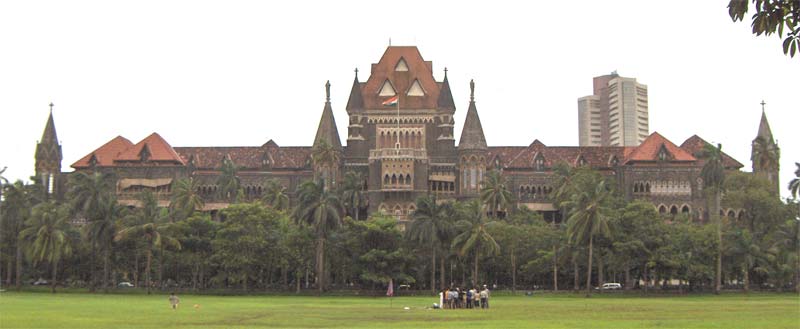
The observation of Bombay High Court (March 2012) that married women should be like Goddess Sita and should give up their all to accompany their husband like Sita did, is what is desirable. The learned judges were opining on a case of divorce in which woman is not willing to join her husband, who has got a job in Port Blair and she is living in Mumbai. The judge’s observation and taking a cue from the mythological figures itself has lot of problems. On the top of that the analogy of Sita may be most painful as far as women are concerned. Despite various versions of Lord Ram story prevailing around the most common and well known in this part of the country is the one of Valmiki. This Valmiki version has been made more popular by Mahrshi Ramanand Sagar through his serial Ramayan. Here the character of Sita is most servile and subservient to the Lord. For example when Ram faces the dilemma of banishing her to forest on the alleged rumors of Sita’s chastity, Sita in Ramanand Sagar’s version herself prods her husband to send her to forest, quite a retrograde fall over the version of Valmiki himself.

Mumbai High Court - Courtesy: Wikipedia

As such in most versions of Lord Ram Story what is common is that Sita is an abandoned child found by Raja (King) Janak while doing the ritual and ploughed the field. She is married off to Ram, who is exiled by his father Dashrath to keep the promise to one of his queens, Kaikeyi. From here the misery of Sita starts. Ravan, who wants to take revenge of insult of his sister Surpnakha at the hands of Ram- Laxman duo, abducts Sita and takes her to Lanka, where she is made to live in Ashok Vatika. Ravan, himself shows a desire for him but she refuses.  Her rescue is also full of insult for her. Lord Ram tells her that he has rescued her to save his own honor! Sita is made to give ‘Trail by Fire’, agnipariksha to prove her chastity. She passes the test and is brought back to Ayodhya to be coroneted along with her husband.

Agnipariksha - Painting by an unknown artist c. 1820
Courtesy: Wikipedia
The misery intensifies. There is a rumor questioning the chastity of the queen. The King, Lord Ram, is witness to the agnipariksha. At this point instead of protecting his wife, who is pregnant, he asks his loyal brother Laxman to dump her in a forest. Exiling a pregnant wife can not by any standard be part of the justice at any time in the history. Years later when Ram meets Sita by coincidence, Ram hesitates to take her back and at this point Sita commits suicide. Probably amongst all the mythological figures, Sita’s is the most tragic tale.

While all this is part of the popular folklore, how come the learned judges give the advice to any married woman to emulate Sita? No woman can have a life worse than this. The other point is in the present society trying to march towards democratic values; can we think of giving the examples from mythology to be emulated today? The period of society depicted in mythologies is the one which was having values of kingdoms. Kingdoms had the values of ‘birth based hierarchy’ of caste and gender. While the claims are that in ancient India, women had a glorious and respectable life, the truth comes out from the values given in the Manusmirti, a book where the women has the status totally subservient and secondary to man. It was precisely because of the caste and gender hierarchy of this ‘holy’ book, that Dr. Ambedkar burnt it.

With women’s movement coming up and gender subservience being questioned, surely our laws and courts have to be sensitive to the aspirations of women. The very concept of woman losing her basic identity after marriage has to be consigned to the dustbin of history. The adjustment between couples has be more innovative, few examples of which one sees in the contemporary times more so in western countries and in good measure around here as well. Here in India also there are couples who chart their own course for togetherness, without losing their basic identities and choices. We need to bring our thinking in tune with the times, the democratic set up, away from the birth based hierarchies towards the concept of equality. The intrusion of feudal and other primordial values has been wearing the garb of fundamentalism, in various religions. Christian Fundamentalism, Islamic Fundamentalism and Hindutva are examples where the subordination of women is legitimized in the language of religion.

Engineering Students - Courtesy:  Outlook
In India with the rise of religion based politics with Ram Temple movement, there has also been a religio-cultural accompaniment in the form of Godmen, modern Gurus, who are talking of status quo of social relationships in a refined language. Manu Smriti’s values are being dished out in the clever disguise by the five star Gurus, with massive following. Many a television serials are also playing a very retrograde role as far as the norms of gender equality are concerned. The TV-Baba combination is very lethal for values desirable in a democratic set up, in a set up where we create social situations to dump patriarchal norms for good.

The analogy of Sita in particular is very painful but as such any analogy from mythological and periods of history before the democratic culture starts coming in has to be shunned. One hope courts and legal structures think of the fate of Sita before ordaining such a life for women in current times.  

Share

Twitter Delicious Facebook Digg Stumbleupon Favorites More