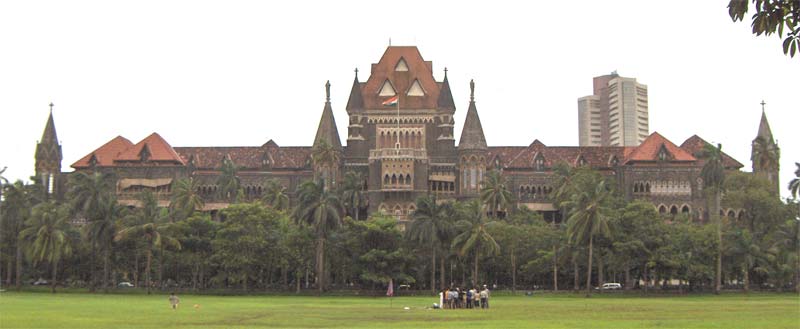
Women’s struggle to break the
shackles of patriarchy and come of their own is a part of
democratization/secularization process of society. In India while this equality has been granted right
with the implementation of Constitution in free India, the social realities are far
from those of equality. With the rise of cultural, religious and social norms,
which accompany politics in the name of religion, the matters are worse off as
far as struggle for gender justice is concerned. While women’s movement has
been asserting the longing for equality, this process has got several obstacles
and these obstacles, when couched in the language of religion become much more
difficult to overcome.
The observation of Bombay High
Court (March 2012) that married women should be like Goddess Sita and should
give up their all to accompany their husband like Sita did, is what is
desirable. The learned judges were opining on a case of divorce in which woman
is not willing to join her husband, who has got a job in Port Blair and she is
living in Mumbai. The judge’s observation and taking a cue from the
mythological figures itself has lot of problems. On the top of that the analogy
of Sita may be most painful as far as women are concerned. Despite various
versions of Lord Ram story prevailing around the most common and well known in
this part of the country is the one of Valmiki. This Valmiki version has been
made more popular by Mahrshi Ramanand Sagar through his serial Ramayan.
Here the character of Sita is most servile and subservient to the Lord. For
example when Ram faces the dilemma of banishing her to forest on the alleged
rumors of Sita’s chastity, Sita in Ramanand Sagar’s version herself prods her
husband to send her to forest, quite a retrograde fall over the version of
Valmiki himself.
As such in most versions of Lord
Ram Story what is common is that Sita is an abandoned child found by Raja
(King) Janak while doing the ritual and ploughed the field. She is married off
to Ram, who is exiled by his father Dashrath to keep the promise to one of his
queens, Kaikeyi. From here the misery of Sita starts. Ravan, who wants to take
revenge of insult of his sister Surpnakha at the hands of Ram- Laxman duo,
abducts Sita and takes her to Lanka, where she is made to live in Ashok Vatika.
Ravan, himself shows a desire for him but she refuses. Her rescue is
also full of insult for her. Lord Ram tells her that he has rescued her to save
his own honor! Sita is made to give ‘Trail by Fire’, agnipariksha to prove
her chastity. She passes the test and is brought back to Ayodhya to be
coroneted along with her husband.
Agnipariksha - Painting by an unknown artist c. 1820 Courtesy: Wikipedia
The misery intensifies. There is
a rumor questioning the chastity of the queen. The King, Lord Ram, is witness
to the agnipariksha. At this
point instead of protecting his wife, who is pregnant, he asks his loyal
brother Laxman to dump her in a forest. Exiling a pregnant wife can not by any
standard be part of the justice at any time in the history. Years later when
Ram meets Sita by coincidence, Ram hesitates to take her back and at this point
Sita commits suicide. Probably amongst all the mythological figures, Sita’s is
the most tragic tale.
While all this is part of the
popular folklore, how come the learned judges give the advice to any married
woman to emulate Sita? No woman can have a life worse than this. The other
point is in the present society trying to march towards democratic values; can
we think of giving the examples from mythology to be emulated today? The period
of society depicted in mythologies is the one which was having values of
kingdoms. Kingdoms had the values of ‘birth based hierarchy’ of caste and
gender. While the claims are that in ancient India, women had a glorious and
respectable life, the truth comes out from the values given in the Manusmirti, a book where the women has
the status totally subservient and secondary to man. It was precisely because
of the caste and gender hierarchy of this ‘holy’ book, that Dr. Ambedkar burnt
it.
With women’s movement coming up
and gender subservience being questioned, surely our laws and courts have to be
sensitive to the aspirations of women. The very concept of woman losing her
basic identity after marriage has to be consigned to the dustbin of history.
The adjustment between couples has be more innovative, few examples of which
one sees in the contemporary times more so in western countries and in good
measure around here as well. Here in India also there are couples who
chart their own course for togetherness, without losing their basic identities
and choices. We need to bring our thinking in tune with the times, the
democratic set up, away from the birth based hierarchies towards the concept of
equality. The intrusion of feudal and other primordial values has been wearing
the garb of fundamentalism, in various religions. Christian Fundamentalism,
Islamic Fundamentalism and Hindutva are examples where the subordination of
women is legitimized in the language of religion.
In India
with the rise of religion based politics with RamTemple
movement, there has also been a religio-cultural accompaniment in the form of Godmen,
modern Gurus, who are talking of status quo of social relationships in a
refined language. Manu Smriti’s values are being dished out in the clever
disguise by the five star Gurus, with massive following. Many a television
serials are also playing a very retrograde role as far as the norms of gender
equality are concerned. The TV-Baba combination is very lethal for values
desirable in a democratic set up, in a set up where we create social situations
to dump patriarchal norms for good.
The analogy of Sita in particular
is very painful but as such any analogy from mythological and periods of
history before the democratic culture starts coming in has to be shunned. One
hope courts and legal structures think of the fate of Sita before ordaining
such a life for women in current times.
Recently we happened to read in
an Indian journal an article by Sri K.P. Kesava Menon written on his 83rd
birthday. Sri Menon was a former High Commissioner of India in Ceylon, a writer, a patriot and one of India’s
foremost journalists. Even in his old age, whatever he writes is read avidly
and taken as words of wisdom .by millions in India. We quote below the
translation of a small passage from that article:-
''A person s faith takes its shape from his own experience. Is it right
to deny the experience of another person simply because you have failed to get
the same experience? When I look at the sky at night, I am not able to see
even a single star there, because I am now blind. If a person seated next to me
revels at the splendour of the millions of stars he sees in the same sky, shall
I be right in accusing him that he is telling a lie? If another person who is
looking through a telescope, describes about still more stars he is able to
see, will it be right on my part to say that they are purely the result of his
imagination? Ordinary men do not have the physical strength of a Sandow or a
Joe Louis. These strong men do not have the intelligence of a Ramanujan or
Einstein. If it is so, is it not possible for some persons to have more
spiritual powers and more spiritual experiences than others. It is my faith
which gives me peace and happiness. Similarly if others also may derive peace
and happiness through other types of faiths, why should I try to shake their
beliefs?" (Mathrubhoomi Weekly)
What Sri Menon says, though very
misleading, may appear to be sound arguments even to many intelligent
thinkers.
Let us have a psychological
evaluation, and analysis of mental experiences and beliefs of man.
KP Kesava Menon
Experiences or perceptions are of
two types - subjective and objective. Objective perceptions, like that of the
person seeing the stars in the sky, either by the naked-eye observation, or
through a telescope, are true and factual, because they can be verified by
others also. Subjective experiences, on the other hand, may be true, but need
not necessarily be factual, and are not always amenable to reason and
verification.
A young boy may be suffering from
enuresis - that is the habit of urinating on the bed in sleep. He may be
getting severe scolding every morning from his ignorant parents. What really
happens in this boy's case is, drop by drop urine is filtered out of the
kidneys and gets collected in his urinary bladder. When the bladder is full,
this information is taken to the brain through the sensory nerves as electrical
impulses. These impulses conjure up a dream in the mind of the child. In his
dream he gets up from his bed, goes to the urinal and urinates there. The whole
thing is only a dream. The fact is that the boy has
urinated on the bed itself.
If one early morning, before the
child is awake, some one in the house lifts him up and removes the wet bed
sheet or mat, and spreads a dry one, and the child is laid back still asleep,
on awakening, as usual he will look with anxiety on the bed. On seeing that
everything is perfectly dry, he will jump up out of the bed with joy, and run
up to the mother and say, "Mammy" last night I did not urinate on
the bed. I went out and did it in the urinal."
The child is speaking the
absolute truth, but it is not factual. It is absolutely true because it is a
subjective experience of the child. But it is not factual, because on
verification, the facts will show that the child did urinate on the bed. It is
a deceptive experience, and it must not be given any credence.
Deceptive experiences or
perceptions can be of three types: illusion, hallucination, and delusion.
Of these three deceptive
perceptions, illusions are false sensory experiences. Hallucinations, on the other hand, are false
mental experiences caused by physical, chemical, biological and psychological
stimuli. Delusions, the third type, are false notions implanted in the mind by
indoctrination and brainwashing.
Let us take the illusions first.
They can be of five types, depending on the five senses - optical or visual
illusions, auditory illusions, tactile illusions, olfactory illusions and oral
or lingual illusions.
Appearance of watery patches at a
distance on a tarred road on a hot bright day is an optical illusion known as
mirage. It may appear to be real from a distance. Only on verification by going
near it we will know the illusory nature of a mirage.
The sweet taste of water when
drunk just after eating the Indian Gooseberry, known locally as Nelli, is an
oral illusion. The reality that this water is not sweet, but only an illusory
experience, can be verified by making others who have not eaten Nelli, to drink
it.
Many persons whose minds are
deluded with the belief in non-existing ghosts, demons, Satan, angels, gods,
fairies, goblins etc., may see them at night or in dark places as a result of
optical illusions. Due to the fear artificially created by brainwashing from
childhood, most persons will not have the courage to go near and verify the
truth about these apparitions. All those who have conducted investigations
courageously and scientifically have come to know that such apparitions are
either due to optical illusions, or mental hallucinations:
The juggling feats of magicians,
and the so-called miracles of imposters in the garb of holy men, are all
optical illusions. Neither the magicians, nor the miracle performing so-called
holy men will allow anyone to examine their bodies and dresses for fear of
their conjuring tricks, or frauds being exposed.
Now let us turn our attention to
hallucinations. As mentioned earlier, hallucinations are abnormal or deceptive
mental experiences resulting from physical, chemical, biological and
psychological causes.
Physical Stimuli: Doctors Walter Hess of Switzerland, J. Delgado of
Yale University, and James Olds of Michigan University have succeeded in
creating artificially emotions such as rage, fear, hunger, sorrow, sleep,
melancholia, jubilation, love, eroticism, anxiety, aggression, extroversion,
introversion, friendliness, hatred, pain, pleasure etc., by stimulating the
various control of the brain by electrical impulses, exactly like what happens
in normal life.
Rhythmical sensory stimulations
like drumming, clapping of hands in unison, chanting of refrains, singing,
poetry recitation, slogan-shouting during mass demonstrations, dancing,
physical jerks, alternate flashing of light and darkness into the eye, looking
intensely on psychedelic patterns, bright flames, crystals and black spots on
white back-ground - the usual practices adopted by light readers, crystal
gazers and anjanakkarayas - can cause
hallucinatory experiences in the subject.
The bizarre behaviour of persons
during devil dances, voodoo dances, Rock'n Roll, Baila, Twist, Kavadi dance,
Kolam dance, temple poojas, revival meetings and Pentecostal
sessions, cricket matches, fire-walking, pop music etc., are all due to the
rhythmical stimulations of the nervous system.
Then come the chemical
stimulations. Even from primitive times our forefathers knew the technique of
producing hallucinations by consuming toddy, arrack, opium, ganja and Datura,
which, in Sinhalese is known as Aththana
and in Tamil as Poomathai.
The BalajiTemple in Muthumudali Street in Madras is famous among the Hindus in Tamil
Nadu, because of the unusual religious ecstasy experienced by devotees who take
part in the pooja and the prasadam there.
Dr Albert Hoffman
Prasadam is a sacred ambrosia distributed by the priests among the
devotees in return for their offerings. On 7th May, 1963, the chief priest of
this temple was arrested for possessing 3960 grains of Ganja. During the trial
it transpired that this priest was in the habit of adding Ganja to the prasadam. This priest, of course, knew·
the technique of producing, religious experience with the help of Ganja.
In recent times, numerous
hallucinatory drugs like Lysergic acid diethylamide or L.S.D. to be short, Marijuana, Heroine, Mescaline etc., are used as mental
boosters, and lagerctil, Librium, valium, Miltown, Amital Sodium etc., as
mental sedatives or hypnogens. Dr. Albert Hoffman describes his own experience
after taking a small dose of L.S.D. thus: - "I saw my own spirit getting
out of my body. It remained suspended in space, and I was looking on my own
dead body and crying".
One-millionth grain of L.S.D. can
induce in a person transient hallucinations causing ecstasy and schizophrenia,
which often gives rise to religious experiences. The discovery of chemical substances of the L.S.D. group in
the blood stream of schizophrenics and persons suffering from religio-mania
made Doctor Quastel and Doctor Wheatly to conclude that the hallucinatory experiences
of visionaries ascetics, mystics, Sadhus and
the devotees who enter into trance at religious ceremonies and devil dances are
all due to the derangement of their body chemistry.
Now, we will consider the third
stimuli - the biological causes: Professors Orlando Miller and Allen Fisher,
both of Canada,
have discovered that certain abnormal behaviour patterns in men are associated
with their chromosomal abnormalities. Men with predominating sadistic
tendencies have 22 pairs of XX chromosomes, and one of XYY chromosome, instead
of the normal 22 pairs of XX and one of XY chromosomes.
Mental disturbances can also be
caused by acute shortage of certain vitamins and enzymes in the body. The
disease known as Beri Beri is caused by an acute shortage of Vitamin B 1.
Insane behaviour is an important symptom of this disease. Mental derangement is
also associated with another vitamin-deficiency disease known as pellagra. Such
persons can be brought back to sanity by the administration of the vitamin -
Nicotinic acid.
Like vitamins and enzymes,
imbalance of certain hormones - the secretions of endocrinal glands - also can
produce mental abnormalities. Persons who suffer from an insufficient supply of
parathyroxine - the hormone secreted by the-parathyroid gland - are subject to
severe hallucinations.
A niece of mine, who used to see
my dead mother's spirit whenever she looked towards the sky, was brought by me to
Ceylon
from my ancestral home in Kerala. After a thorough medical check-up, it was
discovered that she had a defective parathyroid To rectify this deficiency she
was given an extra dose of calcium. With the rectification of her body-chemistry
ended the appearance of my mother's spirit before her.
Now let us consider the
psychological causes. It is a well-known fact in psychology that human mind is
susceptible to suggestions. These suggestions can be by autohypnosis,
otherwise known as auto-suggestion, or by hetero-hypnosis. Just as many mental
disorders can be cured by hypnotism, it is possible to induce psychic and
psycho-somatic ailments by hypnotic suggestions.
Religious indoctrination and
brainwashing are slow and continuous process of hypnosis. Talking like a
possessed person, often in a changed voice and fabricated language - this in
psychology is known as Glossolalia -, ecstatic trance during temple poojas and devil dances, healing by
faith, prayer, poojas, pilgrimages,
blessing, anointing, sacrifice, charm, offerings, drinking or bathing in
so-called holy waters etc., are nothing but the effects of auto - or hetero
hypnosis on the subject's suggestible mind.
The late Dr. Behanan Kovoor of
the United Nations - a younger brother of mine - and myself had our university
education in Calcutta,
about thousand five hundred miles away from our home in Kerala. Almost all the
Hindu families in our neighbourhood requested us to bring for them at least a
small quantity of the sacred water from the river Ganges.
Though prohibited by law now, more than half a century ago, it was a usual
practice for the Hindus living in the Gangetic plane, to ceremoniously deposit
the dead bodies of their kith and kin, into the sacred river Ganges,
so that they may attain moksha or
salvation. Numerous corpses in varying stages of decomposition could be seen
floating in this so-called holy river at any time. Instead of taking this
highly polluted water to our good neighbours, we used to fill two bottles with
tap water from the nearest Railway Station to our home town, and distribute it
to our neighbours as sacred water from the Ganges.
We perpetrated this fraud for four consecutive years, and every time we
returned from Calcutta
we had to give patient hearing to the marvellous cures affected by the previous
year's supply!
The tap water from Kottarakkara
Railway Station became a curative medicine for those credulous folks purely as
the result of suggestion on the minds of our gullible neighbors.
Deep mediation and chanting of
refrains have self-hypnotizing effects. Utterances of persons in deep
meditation or trance, are nothing but the hallucinations of deranged mm~, and
should not be regarded as divine revelations or occult messages. L.S.D. and
Ganja also can produce the same effect. Neurotics and psychotics in meditation,
who claim to have received divine revelations, who claim to have achieved enlightenment,
who claim to possess paranormal miraculous powers, and those who profess to
possess the power to know all the secrets of the unknown and the unknowable,
are all fit subjects for the psychiatrist's couch, and not saints and sages to
be adored, worshipped or counseled. Diversity in religions is due to the
diversity of hallucinations of their respective founders.
Lastly let us consider the third
type of deception perceptions: the delusions.
Delusions are accumulated false
beliefs resulting from indoctrination and brainwashing from impressionable
ages. Beliefs n ghosts, demons, satan,
angels, gods, astrology, palmistry, numerology, necromancy, charms, curse,
blessings, seth kavi, vas kavi, omens, sacrifices, pirith nool, pilgrimages,
anjana eliya, light reading, card reading, tumbler talk, clairvoyance,
clairaudience, telepathy, precognition, telekinesis, holy persons, holy places,
holy objects, holy times, hell, heaven, rebirth, purgatory, materialization,
levitation, transmigration, etc are some of our delusions.
As Sri Menon says, it may be that
some persons may derive mental peace and happiness by his or her blind
beliefs. Similar results, no doubt, can
be obtained by consuming L.S.D, Ganja, opium toddy, or kasippu also! But it is not a question whether any type of experience induces peace or happiness, but
whether it is true.
(Exposing Paranormal Claims - Abrahama Kovoor, Published by B. Premanand, Indian CSICOP, 15-3-2000)
Time and over again while interacting with the youth from Kashmir what comes forth straight and striking is the pain and anguish of the youth, their frustration, their realization about the brutality of the system in which they live in Kashmir. Youth from Kashmir coming to different parts of India for various meetings and interactions generally display a high level of understanding of the issues involved and are vocal about the restlessness over their present and future. What have we done to be labeled as ‘terrorists, is one of the questions on their mind and lips. Why we in Kashmir have to face the torture from different quarters, including the one from Indian army. The restlessness is so much on display that one can gauge the depth of their feeling about the role of armed players, the militants and the Indian army both in different measures.
What are the causes of the frustration of the youth and others from Kashmir and what is the way out? Recently, (May 2012), the recommendations of the group of interlocutors, Dileep Padgaonkar, Radha Kumar and M.M.Ansari have been made public. This team has given its recommendations about which the Government is non committal at the moment, while the BJP has rejected them on the ground that it is a dilution of the accession of Kashmir to India. The separatists find it insufficient saying that there is no political settlement of the issue. Essentially while the team has rejected the return to pre 1953 position, it has also made significant recommendations which are in the direction of restoring the autonomy of Kashmir. Being close to the Pre 1953 position, the team suggests that the parliament will not make any law for Kashmir unless it relates to the security, internal and external of the state. Significantly it gives the status of ‘special’ instead of ‘temporary’ to the article 370, which is the bone of contention for the ultra nationalists like the BJP. Very correctly the team says that the proportion of officers in the state should gradually be changed to increase the weightage of the local officers. It also talks of creating regional councils with financial powers, and measures to promote cross Line of Control (LoC) cooperation while talking of resuming dialogue with Huriyat and Pakistan both.
It seems the team has done quite a bit of its homework and while addressing the issue of discontent in J&K, they have also tried to register the realities which have emerged during last six decades. It seems to be a major effort around which debates for initiative needed to restore the calm in the state can be seriously discussed. Undoubtedly the people of Kashmir have suffered a severe violation of their human rights all through. The treaty of accession giving full autonomy to the J&K had come under heavy strain from the communal forces in India. Right from beginning the right wing elements, the future founder of Bhartiya Jan Sangh, the previous reincarnation of BJP, Shyama Prasad Mukerjee supported by the communal groups had initiated the move to merge it fully with India, doing away with the provisions of autonomy, which were part of the agreement between India and the Kashmir. The pressure of communal elements and the sentiments of emerging Indian Nationalism forced the Indian government to keep diluting the clauses of autonomy of Kashmir over a period of time. The culmination of this was downgrading the status of the Chief of the state, from Prime Minister to Chief Minister.
Sheikh Abdullah
In the face of the communal elements showing their sharp teeth in India, in the form of murder of Mahatma Gandhi and intimidation of minorities, Sheikh Abdullah wanted to explore other options for Kashmir and he was imprisoned for 17 long years. This alienated large sections of Kashmiris, youth in particular. Equally serious was the threat posed by interference from Pakistan. Pakistan’s support to the disgruntled youth and support to the militancy in the initial phases added to the problem in no mean way. Pakistan was duly supported by the imperialist designs of United States which wanted to impose its hegemony in the region. Kashmir being a geographically strategic place US did its’ all to worsen the possibility of a peaceful solution of the issue.
The situation was to worsen further in the decade of 1980s, when the Al Qaeda elements and clones, started infiltrating in to Kashmir. They are the ones’ who communalized the regional problem. The issue of Kshmiriyat was converted intoJihad against Kafirs by the US trained Al Qaeda. Both the words, Jihad and Kafir, were distorted by the US supported Madrassas where these terrorists were trained. The increased militancy was matched by the suppression of democratic norms by and by and the state government was reduced to a satellite of the central government. The parallel process of Indian army being sent in large numbers to curb the militancy was to become the main problem in times to come. Military was to add to the problem as it dug its feet in the state, and the force which is meant to fight the external enemy was ruling the roost in civilian areas. The torture of the innocent Muslim youth knew no bounds. The military methods ran rampage in the state with the phenomenon of widows, half widows coming to the fore. Every youth was a suspect, ruining the lives and careers’ of many of them was passe. Somewhere along the line the communalization of the issue also led to Kashmiri Pundits feeling insecure and encouraged by Jagmohan, the then Governor of the state, left the valley in lakhs. Not to undermine the fact that a large number of Muslims also left the valley to escape the intimidation from guns of different forces.
Today the major obstacle to the normal growth of the state is the conversion of the civilian areas in to military barracks, army breathing down the necks of civilians all over. In India the communal forces made this as another Hindu-Muslim issue. An issue with purely regional ethnic character came to be looked at through the prism of religion, adding to the misery of the Muslim population. Today what we need utmost is the proactive peace in the region and this peace can only begin with the internal withdrawal of military, supplemented by a process of dialogue with dissidents and Pakistan. Kashmir has been looked at as a real-estate issue by India and Pakistan both. The people of Kashmir need to be given primacy while thinking of solution to the vexed issue affecting the peace all over. What we need to keep uppermost in the mind while discussing the recommendations of interlocutors is that will these recommendations reduce the anguish of Kashmiri people in general and Kashmiri youth in particular? Nearly two generations of Kashmiri youth have suffered at the hands of military and militants. US-Pakistan nexus have also been the major players in spoiling the broth. A healthy debate around this report can be a good starting point to restore peace in the region.
It is advantageous to join the
nature-philosophical schools with the description of Materialism, as the latter
stands nearer to them than all other schools. By the way the Indians themselves,
as a rule, speak not of Materialism but they characterize its adherents usually
as deniers or negativists (nastikah).
And it has its good ground. For the Indian Materialism the essential thing is
not the denial of the soul and the exclusive restriction to matter as the cause
for the explanation of the world. The decisive thing, on the contrary, is its
purely negative interest. Its aim is to dispute and deny the continuance of
life after death, the retribution of good and bad work and the moral claims
derived out of them. It is interested in philosophical questions only so far as
they serve this aim. Concerning the rest, it is indifferent to them. That
distinguishes it from all others and also from Nature-philosophical schools.
Naturally Materialism could reach its aim most quickly, if it denied the
existence of the soul. But so far as the assumption of a soul served only the
explanation of the phenomenal world, as was the case in the old
Nature-philosophy, before it was connected up with belief in God and with the
doctrine of Deliverance, it was also acceptable to the Materialism. As a
matter' of fact, there are also found given materialistic directions which
recognize a soul in this sense and which have established a connection,
therethrough, with the Nature-philosophical schools. But while these
nature-philosophical schools were governed by the striving towards the
understanding of the phenomenal world and their attempts at explanation
gradually formed into the full-fledged philosophical system, the materialists
satisfied themselves all the while with their positing of a purely negative
aim. Therefore the Indian characterization of them as 'deniers or negativists'
is appropriate. But in my presentation I will follow the usual practice for the
sake of simplicity and speak of Materialism by which a man should not lose sight
of the right understanding of what has been said.
Erich Frauwallner
Materialistic directions of the
above-mentioned kind are already found in India since early times. The old
maxim, that materialism is as old as philosophy, holds good also here. And just
as we hear, in the recorded oldest Vedic monuments, of believers in god, also
of god-deniers, there is also information about materialistic directions
standing side by side with the oldest recorded monuments of philosophical
doctrine. In India,
there early emerges a characteristic feature which also holds good for the
later period-a close connection of materialism with political theory. The
Indians had early developed a systematic doctrine of state-craft which made
light of all moral scruples in the positing of its aim and of the choice of
means, which, therefore, corresponds to what for us is associated with the name
of Machiavelli. The embodiment of this statecraft is the legendary Minister of
the King Candragupta of the Maurya family, who founded for the first time an
indigenous empire on the Indian soil at the end of the fourth century B.C. The
Indian tradition ascribes the merit for the success of Candragupta to this
Brahmana named Canakya or Kautilya and has always seen in him an unsurpassed
master of the art of statecraft. The most famous Indian literary work about the
science of statecraft is handed down under his name. This Canakya, as is shown
by tradition, is the prototype of the unscrupulous Real-politiker who avoids no
means, if it only leads him to his goal. And his ideal as well as his theory
has been much esteemed in the circles of practical Politikers or politicians.
It is now easy to understand that
such a Politiker from the point of world-view supported himself on a doctrine
which put out of the way or removed all moral scruples that were hindrances to
his action. One such doctrine was Materialism. Its positing of the aim, as we
have described above, corresponds entirely with its purpose. It was created for
this circle, whether it may acknowledge it openly or secretly. It is,
therefore, certainly no accident that the first materialist, whom tradition has
handed down to us in living vivid colours, is a King.
King Paesi: We find, in the canon of the Jaina, as also of the
Buddhists, the account of a conversation which one of their teachers had with a
King who adhered to a gross materialism. The conversation ends, as it is to be
expected according to the origin of the report, with the conversion of the
King. But the narration is carried out in such a lively way and gives such a
graphic picture of the materialistic views in the period of the Jaina and the
Buddha that I cite a few pieces out of them.1
In the City of Seyaviya, there rules a bad King Paesi (the
Buddhists call him Payasi) who believes in no God and no beyond. One day, the
holy man Kesi arrives in this city. Now the King has a charioteer named Citta
who was won over earlier by Kesi as an adherent and who longingly wishes that
the King also should be converted. He knows how to arrange it skillfully so
that the King, during his morning drive, alights down in the park in which Kesi
is staying and it comes to a conversation between the King and the holy man.
The King has heard that Kesi believes in a soul which is different from the
body and reproaches him as follows:
"If you have the conviction
that the soul is different from the body and not the same, I have, on the other
hand, to cite the following. I had a godless, wicked grandfather who did not
administer his Kingdom well and who, after his death must, have reached hell on
account of his bad actions. If now he would come to me who am ever his beloved
grandson-his joy and care-and warn me against living as godlessly as he did, in
order that I should not go to hell, then I would believe that the soul is
different from the body. But as he has not come to warn me, I am convinced that
the soul and the body are the same."
Thereupon Kesi replied: "If
you notice, oh King, that your wife has given herself up to another man, what
punishment would you inflict on this man ?"
"I would get him executed in
any way."
"If the man were to request
you that he should be given some time before his execution in order to warn his
relatives and acquaintances against a similar offence, would you grant him also
at least only one moment?"
"No, why should I?"
"Entirely in the same way,
thy godless grandfather, who according to our doctrine, is in hell, has not
come; he has, no doubt, the wish to come to thee his beloved grandson-his joy
and care-in order to warn thee. But he cannot. Because there are the most
diverse grounds that a being tarrying in the hell, however much he would
like to come to men, cannot come. Therefore, believe, Paesi, that the soul is
different from the body."
And again the King says: "What
you say is merely a comparison and does not apply to the following. I had a
very pious grandmother, who according to your doctrine, must have got, after
her death, into a world of the gods, for her pious acts. If she would come to
me who was her most beloved grandson - her joy and care - and admonish me to
live piously like her in order that 1 should attain the world of the gods, then
I would believe that the soul is different from the body. But she has not come
to admonish me and I am convinced that the soul and the body are the
same."
Upon this, Kesi knew how to
reply. But Paesi has also made an experiment. He reports for example: "1
was once in my reception-hall surrounded by the distinguished elite of my
kingdom. There the city watchman brought a thief whom they had caught. 1 got
him thrown alive into a brazen pot, with a brass lid strongly soldered laid
over it, with the coppersmith watching over him. After some time, I got the lid
opened and found the man dead, though there was no opening in the pot, through
which the soul could have escaped. Had there been an opening in the jar through
which the soul could have escaped 1 would believe that the soul is different
from the body. But it was not the case. So I am convinced that the soul and the
body are not the same."
And another experiment: Paesi had
first executed one offender and then got him locked up in a jar and when it was
opened after some time, the corpse was full of worms. The jar, however, had no
opening through which the souls of these worms could have reached the inside.
Another offender was got weighed by Paesi. Then he was killed, except that his
skin only was injured and he was again weighed. But the weight was the same.
Therefore, no soul could have escaped. Another offender he got hacked to pieces
in order to search the soul but it was not to be found. Such other like
experiments were made by Paesi. Kesi knew appropriate answers to all these
arguments and finally Paesi gives himself over as beaten and converted.
This account gives a lively
picture of an old Indian Materialist on the King's throne. And Paesi was
certainly not the only one of his kind. But however interesting and characteristic
such accounts are, they can rarely claim a place of the same kind in a history
of Indian philosophy. The Materialism gains for it an importance from the moment
only when it emerged in the form of a regular doctrine and took up arms against
the remaining philosophical schools. That occurred also very early. The old
writings of the Buddhistic canons report that, in the time of the Buddha, a
large number of teachers stalked the land and gathered students around
themselves. Among them are found such as represent the materialistic doctrines.2
The oldest Materialistic doctrines: We hear of a certain Purana
Kasyapa who taught the following; "Anybody may do or allow to do anything,
mutilate or allow somebody to be mutilated, roast or allow somebody to be
roasted, persecute, plague, harass or get somebody persecuted, plagued or
harassed, may rob life, steal, break into a house, drag away the loot, plunder
a sequestered house, carry on highwaymanship or brigandage, commit adultery or
lie; but he, with all this, does nothing bad. If anyone, with a razor-sharp
quoit, reduces a living creature on the earth to a heap of flesh, transforms
him into a single lump of flesh, he would thereby prove himself as nothing bad;
it would not appear as anything bad. If any body would go to the southern bank
of the Ganga,3
murdering and allowing somebody to murder, mutilating and allowing somebody to
mutilate, roasting and allowing somebody to roast, he would prove himself as
nothing bad; it would not appear bad. And if he would go to the northern bank
of the Ganga,3 giving gifts and causing them to
be given, sacrificing and causing sacrifices to be offered, it would thereupon
prove in no way meritorious; it would not appear as merit. Through presents,
self-discipline, self-mastery and veracity, there arises or appears no
merit."
A second teacher Ajita Kdakambala
represented the following view: "There is no gift in charity, there is no
sacrifice, there are no offerings. There is no fruit and ripening of good and
bad actions. There is not this world or that. There is no mother nor father.
There are no suddenly born beings.4 In the world, there are no ascetics and Brahmanas
who have gone along the right path of conduct and follow the right conduct,
who have seen this world and that world out of independent knowledge and
proclaimed it. A man consists of four Elements. When he dies, earth goes into
the mass of earth (prthivikayah), the
water into the mass of water, the fire into the mass of fire, the breath into
the mass of air, and the sense-organs enter into the space (akasah). Four men with the bier as the
fifth carry forth the dead person, and they carryon their talk until they come
into the place of cremation. Then there remain only white bones and all the
sacrifices end in ashes. The gift of charity is, therefore, the doctrine of a
buffoon; it is an empty and false talk when anybody asserts that there is
something. Fools and wise men are destroyed and disappear when the body falls
to pieces. They are no more after death."
A third teacher finally Kakuda
Katyayana teaches the following:
"There are seven masses (kayah) which are neither created nor
brought forth. They are unfruitful, unchangeable, and are firm like a pillar.
They move not, nor do they change, they do not disturb each other, nor are they
able to procure joy, grief or joy and grief. Which are these seven masses? The
earth-mass, the water-mass, the fire-mass, the air-mass, pleasure, pain and the
souls (jivah) as the seventh. These
seven masses are neither created nor produced, they are unfruitful,
unchangeable, and firm like a pillar. They do not move nor do they change, they
do not disturb one another and they are not able to procure pleasure, pain or
pleasure and pain. There is no murderer, nor one who allows to murder, nor
anyone who hears or allows to hear, no knower or one who allows to know. When
anybody with a sharp sword strikes off a head, nobody robs nobody of life. The
sword passes, on the contrary, through the empty space, between the seven
masses."
Of these three doctrines, the
first exhausts itself in mere denial of all moral obligations. The second seeks
to prove it with a gross materialism. The third finally represents an ancient
Nature-philosophy which explains all occurrences through the inter-play of a
number of permanent factors. The souls also occur among these factors. But this
doctrine also denies everything transcendent. And all the three are unanimous
in the fact that they deny continuance after death and the moral consequences
arising therefrom, and are, in this sense, genuine materialistic doctrines.
The old writings of the Jaina
also describe similar materialistic doctrines. We, therefore, see that
Materialism arose early in the form of a regular theory. But the development,
thereby, does not remain stationary. It led to the creation of a fully formed
materialistic system which was handed down like all other systems, in the form
of a School-that of the Lokayata.
The Lokayata System: The Lokayata, i.e. the doctrine which concerns
this world, arose in the pre-Christian period. As a founder is regarded one
Carvaka about whom nothing further is known.5 It is characteristic for this
system that it is clothed in the same form like the remaining systems. Like
these, its doctrines are written down in aphorisms which were orally handed
down.6
Further one took care to refer his doctrines to a holy seer of antiquity in the
Brahmanical circles. In a similar way, the Lokayata derived its doctrine from a
higher authority. As we have already heard, the Materialism was connected most
closely with the circles which taught the art of Statecraft. But as the highest
teacher of the art of Statecraft and as its legendary proclaimer was
co.1Sidered Brhaspati, the teacher of the gods and besides him, there was
Usanas, the teachers of the Asuras, the demon,. Accordingly, the Lokayata
traced back their aphorisms to Brhaspati. Besides we also hear of a school
which refers itself to Usanas.
Like the aphorisms of the Vaisesika
and other systems,7 the aphorisms of the Lokayata also begin with
the words: "Now we shall explain the truth." Now the chief maxims of
the system follow sharply and trenchantly.8 "Earth, water, fire, air: these are the
entities." "One designates their connection or combination as body,
sense-organs and objects." "Out of them develops the mind or spirit
itself." "The knowledge arises like a force of fermenting intoxicant
out of a yeast, etc." "The expressions of life (jivah) resemble bubbles in water." "And because there
is nothing that continues in the world beyond, there is, therefore, no world
beyond."
With this has been said what is
essential of the Lokayata. The man consists only of four elements; there is no
soul. Therefore, there is no beyond and no retribution of good and bad actions.
These short maxims or aphorisms
were explained and further set forth, first in oral and, later on, in written
elucidations. For example, the question was raised by the opponents' side,
why, when as a matter of fact, everything consists of the elements; the
sentiency emerges only in the human body and not in inanimate things like a pot
or a vessel. Thereupon, the reply was: "The sentiency does not .emerge
into appearance in vessels etc., because the remaining causes are missing, just
as in sand, the force of intoxication or intoxicant does not appear
forth."9Again,
the force of intoxication, when it is to appear forth, presupposes not only the
presence of necessary things - flour, water and molasses and the remaining
ingredients but also the fact that these must be in a particular condition of
mixture. So also the elements only may produce the sentiency when they appear
in a particular state i.e. in the form of the body as skin, bones, flesh and
blood. In the corpse already, this condition is not preserved unchanged and
therefore sentiency has vanished from it." In order to derive all the psychical
processes out of the Elements, one took hold of the doctrine of the three
juices in the body--phlegm, bile and wind.10 It was taught that through phlegm, there arises
desire, through bile, hatred and through wind, delusion. The manifoldness of
life-forces, that one experiences in incalculable alternation-now joy, now
grief-was traced by the opponents of the Lokayata to the power of good and bad
actions which, according to the rigorous law of retribution, lead to joy and
grief. This law was denied by the representatives of the Lokayata and they
appealed to the incalculable accidental rise of bubbles in water for
explaining the accidentality of joy and grief. They also asserted that natural
feelings or experiences ascribe all these life-forces to no soul. .Because, for
example, when a man says : "I know" or when a man also says, "I
am lean; I am fat", he speaks of no soul but only of a body. Because there
is no soul.
The Buddhist teachings demanded a
special comment, as they assumed no soul but only a stream of consciousness
i.e. a connected series of knowledge-moments.11 What was concerned here was not
the contesting of the belief in a soul-which was also denied by the
opponent-but of the proof that the series of knowledge-moments does not endure
uninterrupted and does not continue from one existence to another. Because that
was the proof of these schools in asserting in support of a continuance after
death and of a retribution of good and bad actions. Accordingly, the
representatives of the Lokayata emphasized that the coming into existence of
knowledge was bound up with a body and with entirely definite prerequisites.
Therefore no knowledge comes into existence in the embryo, because the
sense-organs are not still developed an6 there is no object (for them). So also
knowledge is suspended in a state like that of swoon. The knowledge in an
alleged rebirth depends, however, on an entirely another body and is exactly
different, like the body, from an earlier knowledge. There is, therefore, as
little connection as that in the knowledge of two different beings who live
simultaneously near each other. It is not also right to trace back, as one
does, the expression of passions and instinctive behaviour of small children to
experiences in earlier births. For, then, a man must be able to remember
earlier (former) births, not only in Isolated cases asserted by the opponent,
but in general, Just as all people who were together in one village would remember
about it in a similar way .
There is, therefore, no soul, no
survival after death and no retribution of good and bad deeds. When one speaks
of such things, it is only a misuse of words, which originally implied something
quite different.12
The 'other world' (paraloka) which
word in India
denotes a peculiar meaning, is nothing else than another place, another time
and another condition.13 Hell is nothing else than grief full of agony. Deliverance
is the destruction of the body. The highest god is an almighty King.
The adherents of the Lokayata
developed and proved their doctrines like this. But there were not only
systematic explanations or proofs with which they met their opponents. They also
knew to use especially effectually the weapon of derision and knew how to make
the opponent a laughing stock. Their derision, in the first place, was directed
against the sacrificial cult of the Brahmanas. They said, for example,14
"If a man after leaving the body enters into a world beyond, why does he
not again come back, driven by the impulse of love or affection to his relatives?"
But the belief in the other world is meaningless. Because, if "a
sacrificer would reap the reward of heaven, after the sacrificer himself, the
sacrificial act and the implements of sacrifice are long gone (into the limbo
of the past), the trees which were consumed by a forest conflagration would as
well bear fruit." Equally meaningless it is to offer an ancestral
sacrifice to the dead. "If the ancestral offering of worship would be the
source of gratification to the dead, then one could as well feed the flame of a
lamp which is extinguished." "Fine, indeed, would be any such effect
on the things which are distant. Then a man need not provide provisions (of
food etc.) to the people who go on a journey. Because, then, nothing would prevent
one from satisfying him (his hunger and thirst) by an ancestral offering of
worship performed at home. ! But it is all a swindle! The ceremonies for the
dead which the Brahmanas performed have been performed to provide themselves
with means of maintenance. There is nothing else in that." Generally,
"the fire-sacrifice, the three Vedas, the bundle of three sticks which the
Brahmanas carry, and the besmearing with ashes serves only as a means of
livelihood for men who lack intelligence and energy for any other occupation."
"The mortifications, the different self-torments, the self-discipline, the
deceits for the sense-satisfaction and the sacrificial acts like the
fire-sacrifice are regarded as childish play" by reasonable men. If really
that would have been true, "if", really as the Brahmanas assert,
"the animal slaughtered in the sacrifice would go to heaven, why does not,
then, the sacrificer kill his father in order to despatch him to heaven?"
But "the authors of the Vedas are none else than the three categories of
the crackers of jests, rogues, and nigh t-sneakers, when they utter their
unintelligible gossip, their 'jarbhari'
and 'turbhari' "15 passing
it for the words of wise men. That is why one should not believe in anything of
this kind but should live happily, so long as life lasts. There is nothing
which does not expire after death. Once the body becomes ashes, then there is
no recurrence”.
Thus represents itself in broad
features the doctrine of the Lokayata in the older period. Its
thought-processes are simple and have rarely interfered in the philosophical
development. But they have continually found adherents and their school has
maintained its ground through the whole centuries. Its situation becomes more
difficult at the end of the classical period of Indian philosophy, when logical
and epistemological questions moved to the forefront of interest and when every
system was compelled to take them into consideration, on which their systems
were founded. The adherents of the Lokayata also could not escape this demand.
Originally they made light of the fact. In the sutras of Brhaspati16 it is said: "The inference is not the
means of right knowledge." One, therefore, appealed only to sense-experience
and simply dismissed the further assertions of the opponent. One could do it so
long as inferences which were arrived at by the antagonistic schools were
simple inferences by analogy. It was enough to show the faultiness of every
conclusion, in order to decline every inference as unreliable. Things, however,
were different, as the opponent developed the firmly grounded scientific
doctrines forming conclusions. One had to discuss these, nay, one was compelled
to establish his own doctrine differently as from what he had done hitherto and
to defend it. Partly one tried to hold fast to the old line, as, for instance,
when one explained:17 "The aphorisms of Brhaspati have only this
aim, viz. to refute the opponent". But in the majority of cases one
decided to discuss the doctrine of inference and to take it over at least in
parts. This desertion of the original attitude led, in no way, to the
consequence of the decline of the system. The taking up of foreign thoughts
and occupation with them led, on the contrary, to a regular activity and to a
blossoming up of a literature richer than hitherto. We have, however, reached
with it a turning point, in the development, at which we must provisionally
halt.
Also among the other systems with
which we have dealt, we have seen that at the end of the classical period of
Indian philosophy about the middle of the first post-Christian millennium, the
system-building in essentials had come to a close and had been at a
stand-still. In its place there stepped in the forefront the theory of
knowledge and there developed a lively and fruitful activity in this sphere for
several more ·centuries. The presentation of this development, which appears to
a certain extent as a second blossoming of the classical period, we have
hitherto put in the background, in order to handle it separately as an
independent section of Indian philosophy. Now we see that the Lokayata also
came round to the same path about the same time. But before we can go over to
the presentation of these sections of development, there remains for us a group
of systems to handle, which later sprang forth and to which we have referred up
to this time, but which developed themselves to so great importance and
scrambled for the lead through several centuries-namely the systems of the
Buddhists.
Bibiliography
Hillebrandt, A.: Zur Kenntnis der
indischen Materialisten. Aufsatze zur Kultur und Sprachageschichte vornehmlich
des Orients, Ernst Kuhn gewidmet, Miinchen 1916, p. 24-26.
Tucci, G.: Linee di una Storia
del materia1ismo Indiano. Memorie della R. Accademia Nazionale dei Lincei,
Serie V, Vol. 17-Fasc. 7/1923 and Serie VI. Vol. 2, Fasc. 10/1929.
Ruben, W. : Materialismus im
Leben des alten Indien, Acta Orientalia XIII, Leiden 1935, p. 128-162 and
177-225.
Dakshina Ranjan Shastri : Short
History of Indian Materialism, Calcutta
1930.
Translations are not mentioned;
apart from a few concise works recently found, in later times, the literature
of the system is lost. Nothing much is to be remarked about my presentation. In
a history of Indian Philosophy, the systematic materialism of the Lokayata must
naturally stand at the middle point or centre. A grouping of scattered
utterances of materialistic views has no value, because therethrough no essentially
new features come forth. For the systematic Lokayata, the most important thing
is the assembling and making use of the available fragments. It is still, up to
this time, not performed in a satisfactory form hut is not difficult for the
older times. Difficulties present themselves only in the post-classical times,
where the thought-processes become complicated and isolated authors and works
become available for consideration. But it falls already out of the limits of
the present volume.
Notes
This deals with the second Uvangam of the Jaina, the
Rayapasenaijam, to whichh from the Buddhistic Side Dlghanikaya XXIII (Payasisuttanam)
= Dirghagamah 7 corresponds. Of both the versions, the Jinistic one is,
according .to all appearances, the original one. Compare E.
Leumann, Beziehungen der Jaina-Literatur zu andern
Literaturkreisen Indiens. Actes du sixieme Congres Internatinal, des
Orientalistes tenu en 1883 a Leide, Troisieme Partie, Section 2, Leiden
1885, p. 467-564. I closely follow,
in the following, the translation by E.Leumann, though in doing so, I have
made it more smooth and short.
Compare Dighanikaya II (Samannaphalasuttam) = Dirghagamah
27
The northern bank of the Ganga
was considered at that time as an old Brahmanical holy land in contrast to
the southern bank.
The beings in the hell and the world of the gods are
not produced but they originate suddenly and directly The belief in such
suddenly originated beings is, therefore, of importance for the doctrine
of the rebirth and of the retribution of good and bad actions in the
world beyond.
The word Carvaka holds good partly as the name of the
founder of the system but is also explained in a different way.
The aphorisms of Brhaspati are not preserved to us
but are only known from quotations. And as the remaining literature of the
system is lost and besides, the works and the authors, about whom we hear,
belong to a later time, I have not further gone in this place into the
literature of the Lokayata.
The beginning of the Vaisesika-Sutras runs originally:
Yad iha bhavarupam tat sarvam
abhidhasyami (compare Vyomasiva, Vyomavati p.47, 13 f and 492, 25)
The quoted Sutras are often quoted in an isolated
manner. In the cited order, they appear in Prabhacandra,
Nyayakumudacandra, Manikacandra Digambara Jaina Granthamala Vols. 38-39, Bombay 1938-41, p.
341, 17 ff. I follow it here.
Prabhacandra, Nyayakumudacandra p. 343, 9 f.
Compare p.
(27) f.
For the
following, compare Santiraksita, Tattvasamgrahah, Gaekwad's Oriental
Series No. 30-31, Baroda
1926, v. 1857 ff.
Compare Sayanamadhava,
Sarvadarsanasamgrahah, Anandasrama Sanskrit Series No. 51, Poona 1928, p. 2, 23
f. and 3, 1-4.
Santiraksita,
Tattvasamgrahah v. 1874.
The verses
employed for the following are found in their largest number in Sayanamadhava's
Sarvadarsanasamgrahah, p. 5, 1 ff.
jarbhari and
turphari are antiquated obsolete Vedic words which become unintelligible
in later times and appear to the sceptics as a senseless Abrakadabra.
Pratyaksam eva pramanam anumanam apramanam.
Compare Abhayadevasuri, Tattvabodhavidhayini on Sidhasenadivakara's Sammatitarkaprakaranam,
Puratattvamandlra Granthavali No. 10, 16, 18, 19 and 21, Ahmedabad
1923-30, p. 70, 18 f and 73, 14 ff.
Sarvatra paryanuyogapararni eva sutrani
Brhaspateh. Compare Abhayadevasuri in his above referred-to work, p.
69, 39.
This essay is Chapter 9 (The Materialism) of
Erich Frauwallner’s History of Indian
Philosophy, translated from German to English by V.M.Bedekar
Parliament was rocked
(May 2012) with the discussion on the alleged insult of Dr. Baba Saheb Ambedkar in the cartoon in NCERT text book for standard XI. The MHRD Minister immediately declared the withdrawal of the book and asked for review of all books for which a committee has been appointed. This is yet another instance where the intent and meaning of the said cartoon has not only been misrepresented but also the hype has been associated with the alleged insult of Dr. Ambedkar. Interestingly this cartoon appears in the book, which is part of a series, brought out by NCERT, which can easily be rated as of being of very high standard, being very lively and incorporating the core issues related to the politics of the country.
The cartoon by one of
the foremost Indian cartoonist, Shankar Pillai, shows Dr. Ambedkar sitting on a snail and prodding it to go faster. Behind the snail Pundit Nehru is standing prodding the snail to move faster. The whip in the hands of Nehru, in no way is directed against Ambedkar, but is directed against snail. Ambedkar is in command of the snail, which is depicted as the process of making of Indian Constitution. The reading of the cartoon, put extremely creatively in the book, is to show the slow pace of the constitution making process. In what way this is against Ambedkar, defies the logic in toto. The dalit leaders who have raised the issue, Ramdas Athawaley, and later supported by Mayawati and others needed to think more on the lines, as to why Constitution making process was at snail’s pace rather than picking up a totally misreading of the point and making it an emotional issue.
On the same issue some
youth rampaged the office of Prof Suhas Palshikar, who has been the advisor of NCERT committee, which went into the making of this book. What a paradox, the person who drafted a Constitution giving us freedom of thought and expression, in his name the same freedom of expression is being throttled. The cartoon was made in late forties, when Ambedkar and Nehru both were very much there, and surely both must have mused at the cartoon and realized their helplessness in pushing the speed of Constitution making rather than penalizing the legendary cartoonist Shankar.
Final issue of Shankar's Weekly
The whole episode
raises multiple questions. None of these relates to the plight of dalits and Indian constitution. One recalls that just a decade ago NDA Government led by BJP had undertaken the exercise to ‘review’ the Constitution on the grounds that it needs to change. That time dalits stood in unison and saw the designs of BJP, the political arm of RSS, to change the secular democratic structure of constitution and to replace it with one based on Hindu holy books as desired by the RSS in its pursuance of its agenda of Hindu Rashtra, was thwarted. A decade later we need to be more concerned about the threat to the values of Indian Constitution rather than focus on an emotive issue related to the same.
Why was the
Constitution making process slow? Is it because Dr. Ambedkar wanted it to be slow? Not in the least. It was slow despite the best efforts of Dr. Ambedkar and despite full support from Nehru, because the opposition to this process was prevalent all around. RSS chief M.S. Golwalkar articulated the opposition to this process by saying that we don’t need a new Constitution as we already have the 'glorious' constitution in the form of Manusmriti.
RK Laxman on the protest against Hindu Code Bill
One recalls here that the
chief architect of Indian Constitution Dr. Ambedkar had burnt Manusmiriti on
the grounds that it has provisions of slavery of Shudras and women. The process of Constitution making was slow because communal orthodox forces were not for the social change which the Constitution envisaged. Those following the values of Ambedkar need to focus more on the fact that the forces which were making the process slow have become stronger today and are posing an obstacle to the issues of social justice even today. Social justice was the major plank for Dr. Ambedkar and even while introducing the draft of Constitution in the Constituent assembly he pointed out that with this Constitution we are entering the era of ‘One Man One Vote’, i.e. political democracy, but the social democracy seems to be still a goal not very easy to achieve.