Saturday, 10 August 2013

Religion, Atheism and Secularism

Ram Puniyani


Last three decades have seen an unprecedented presence of religion in social and political space. Somewhere the acts of terror, somewhere communal violence and somewhere the political influence of religious right on society and political processes, all these phenomenon have overshadowed the deeper inequities in the society, the aspirations of people for dignity and rights amongst others. Now comes a book which predicts that religions will become a minority vis a vis the practice of secularism in the decade of 2040s. The book is “Why Atheism will replace religion: The triumph of earthly pleasures over pie in the sky” written by Nigel Barber. This book relates the rise/fall of the religion with economic power and makes an observation that atheists are much more in developed countries.

The book is based on the study of 137 nations conducted by the author and concludes that in the countries; more developed the welfare system; higher is the number of atheists. The book’s crunch line is, in countries where distribution of income is even, lesser is the number of religious people. The author is a prominent psychologist. He makes a prediction that people will feel lesser need of supernatural beliefs when the tangible world is providing them for their real needs. Also in a survey conducted in America 20% people identified themselves as Atheists.

There is some terminological confusion here to begin with, while the study is a very reasoned one, and links the lack of security with the belief in god and practice of religiosity. Surely many a religions themselves have atheism as a component of their structure. Some streams of Hinduism like Charvak deny the existence of God. Jainism and Buddhism also do not talk of a supernatural power, but it’s another matter that followers of these religions converted the prophets of these religions themselves as Gods and are worshipping them. In the broad umbrella of Hinduism there are many traditions, Brahminism, Nath, Taantra, Bhakti, Siddh etc. In Hinduism itself the concept of God is also very diverse, from the polytheism with multiple Gods and Goddesses, tri-theism (Brahma Vishnu Mahesh) to the single God; Ishwar and then to the concept of formless power all these concepts are coexisting together merrily today.

In India thee atheist tradition starting from Charvak, in present times it found a strong articulation amongst communists the epitome of which has been Bhagat Singh with his famous tract, ‘Why I am an Athiest’. Also radical social reformers like Periyar Ramsamy Naicker gave the atheist movement a powerful lift. The rationalists association is nurturing the same to a great extent.


Other religions, where there is a single God, the concept of God keeps varying between the God with form and body to the formless power. Many decades ago a plethora of books debated about the existence of God. But last three decades in particular have seen a very different phenomenon i.e. gross abuse of religions’ identity by the political forces of status quo. Earlier to this, one saw in the beginning of 20th century, in the decade of 1920s, Christian Fundamentalism was a response of the conservative sections of society to the process of social change brought about by the process of industrialization and education due to which Africa-Americans and women started coming to social space. Islamic fundamentalism makes a political appearance with the regime of Ayatollah Khomeini in Iran. Here it was the politics related to oil and the high handed politics of Western powers which foiled the popular revolution and brought in a cleric as the head of the state. It was during this period that conservative versions of Islam were promoted by some of the rulers who were scared of popular urges for democracy. Salafi version of Islam is one such which was used in Saudi Arabia to keep a tight leash over the popular aspirations so that the Saudi oil can keep flowing in to the tankers of oil companies controlled by US-UK giants.

It is the same Salafi version of Islam which was brought in to the service of US hegemonic interest to control the oil in the region.  This version was taught in the Madrassas in Pakistan. These Madrassas were set up with US instigation, money and syllabus, through which the Mujahedeen, Taliban Al Qaeda emerged and played into the hands of US designs of throwing away Soviet army from Afghanistan. In India, the insecurity of the section of middle classes in the face of rising presence of dalits and women in social space in the decade of 1980s led to the political abuse of religion’s identity by BJP when it took up the issue of Ram temple.

While the author of the book is talking about the release of the hold of religiosity and God with rising affluence, today sitting in South Asia the scenario seems to be the other way around. In Pakistan the hold of Mullahs on the social affairs is a big obstacle to the firm rooting of democracy there. In Sri Lanka again thousands of Tamils were butchered while attacking LTTE, lately one is seeing an attack on Christians and Muslims there. Not to be left behind, in Myanmar, the retrograde political forces are attacking poor Rohingya Muslims in the name of Buddhism.

One must add that there is no contradiction between secularism and religion. The author of this book is not clear on this. With secularization process, the role of clergy was relegated to the private sphere of society but religion as such was there. God was there. It’s now that with prosperity going above the critical levels that more people are feeling less need to call upon God to help them live a secure life.  In South Asian countries a complex process had been witnessed all through. While people with great amount of religiosity and belief in God like Mahatma Gandhi and Mualan Abul Kalam Azad stood for secular state, the non practicing Muslim like Jinnah led the movement for a state in the name of Islam and an atheist Savarkar, was the ideologue of Hindu nation. Many a leaders of Hindu national politics may not be so religious but in the political arena, they create mass hysteria in the name of religion and God.
 
One wishes to agree with the authors’ prediction. Hope it is not restricted just to Western countries. What is more important is to realize is that mass spectacles of religiosity are an expression of deeper social insecurities, which are being cashed in by the politicians of ‘status quo’, who are deliberately using this religious identity to ensure that social distribution of resources to weaker sections is stalled. Today in India one can see a clear cut battle between those who stand for social welfare, and struggle to bring in measures go in that direction on one side. On the other are those political forces that resort to polarize the communities along religious lines, around identity issues. The latter have a social base amongst the socially insecure middle classes and the backing of section of big corporate houses. Seeing the pains of this battle between two paths, one turns pessimistic at times whether if at all, South Asia can get over the imposition of God-Religion in political arena and focus on improving prosperity with equitable distribution in society. In many a propaganda-claims being made for ‘development’ the factor of equitable growth is missing and that’s where the real definition of development lies. The bluff of development by communal forces has to be countered and the emphasis on the growth with concern for equity, affirmative action for the victim religious minorities and dalits-adivasis is the core around which the battle against the blind religiosity and assertions of politics in the name of religion has to be taken forward.

Western countries though far from the ideal in prosperity and growth, at least do not have the baggage of politics of religion’s identity in such a strong way as is prevalent in ‘post-colonial’ states; that is dogging South, West Asia in particular. This book gives the hope as far as prosperity and equity is concerned one hopes that this applies to the troubled countries where abuse of religion’s identity is playing havoc with the concept of human rights and survival of large sections of society. 


Thursday, 8 August 2013

Evil, Freedom, Suffering and Sport

AN Moorthy Rao

Let us consider how some people explain the existence of evil: "God bestowed on man, right at the time of creation, all the powers and qualities that man needed. He does not want man to be a puppet in His hands. He has, therefore, given man freedom of will. Man is free to use these God-given qualities according to his own judgment. If he uses them for evil purposes it is, then, his own fault and not God's".

Let us apply this logic to the events in this world - past and present. Some years ago, an American youth gained notoriety by committing a series of murders. That is how he decided to use his God-given freedom. He was convicted all right. But, what about the victims of his freedom? Just as he had the 'freedom' to commit the murder, did his victims not have the freedom to live and not to be murdered? To say that they had the 'freedom to escape' is perverse logic. Someone may fire at me through the Window when I am just passing by. How can my freedom prevent it?

God gave freedom to Hitler and millions of people fell victims to it. God gave Gen. Dyer[1] freedom which he too used to slaughter men. Did the victims of these two men I have the freedom not to be killed? Perhaps yes, theoretically. Even so, they were not capable of saving themselves, faced with murderers. Can we throw someone into the sea, bound hand and foot, and then tell him, "You have the freedom to save your life?"

Did God punish Hitler? Eventually, he was defeated and he died. Well, he had to die some day; only, he died • a few years earlier. As for Dyer, he was honoured (for saving the Empire by butchering the innocent) by his people with a purse of 26000 pounds.

Even if they were punished, what did it matter to their victims! Anyway, that there is evil in this world is clear. Where does it come from? Just as there are some religions which believe in a virtuous God, so there are also religions that believe in a person that is evil incarnate. In the Bible, he is called Satan. He is said to be at the root of all evil. But surely, Satan did not create himself. All creation, including Satan, is the work of one God. Then, the responsibility for creating even the evil Satan is certainly God's. There has been no convincing answer to the question: 'Why did God create evil'? So, one can only conclude: 'Evil exists, God does not!’

The Problem of Pain and Misery

For the sake of convenience, let us club mental agony and physical pain and refer to them as 'suffering'. The problem of suffering has troubled me more than the problem of evil. Evil and suffering are possibly, but not necessarily, related. Why did God permit suffering? So far as I know, there are four answers to this question.

1. "Without the experience of suffering, we cannot know happiness". (Even if, for the sake of argument, we assume this to be true, the question arises: why did not God enable us to enjoy happiness without suffering? Well, let us leave it at that.) This is a far-fetched argument. If true, it leads to the conclusion that one cannot be aware of suffering unless one experiences happiness'. But, neither of these two arguments is sound. Is 'happiness' happiness only when it follows sorrow? Can one experience the sweetness of sugar only when one has tasted the bitterness of worm­wood earlier? Give a three-day old infant sugar and it relishes H. This is my personal experience. I was completely unaware of the anguish .of parents who had no children. There was a time when I used to say 'I would rather not have children at all. Nor the responsibility of bringing them up. And if I do have children, I will happily give them away to someone who does not have a child'. But I was, nevertheless, happy when my children were born. I shouldered the responsibility quite gladly - with no prior experience of suffering though!

2. "What we call suffering is, in fact, not suffering in the true sense. Viewed from a narrow and egoistic standpoint, it may be suffering. But for some reason and in some way, our suffering becomes essential in the larger interests of the world. God looks at 'suffering' from a cosmic point of view. Our finite minds are incapable of taking such a cosmic view. So, we experience suffering". This argument can be answered as follows:

  1. That suffering is essential for the larger good of the world is only conjecture, speculation, while suffering is a fact of life.
  2. Could not the all-powerful, all-knowing God achieve the good of the world without suffering? (God has had to face no end of criticism on account of His omnipotence and omniscience!)
  3. The proponents of this agreement assert "Our finite minds are incapable of taking a universal view. We, therefore, experience suffering". Now, what does it imply? That suffering is only an illusion? Even if it is, is the experience of' suffering not real? I knew an elderly gentleman. He headed a govern­ment department, earned a handsome salary and was also quite affluent. But, owing to some mental illness in his old age, he suffered from an illusion that he was extremely poor and, in fact, lived the life of a destitute. He hesitated to spend even a meagre sum on medicines. He complained about his plight to everyone. Till his death, he was a victim of this hallucination. His 'poverty' was, of course, only an illusion, but his suffering as a result of that illusion was a fact!

There is this limerick, ridiculing the view that suffering is not really suffering:

There was a faith - dealer of Deal[2]
Who said 'Pain isn’t real',
But when I sit on a pin,
And it punctures my skin,
I dislike what I fancy I feel!

3. Sport: The ‘sport’ theory is similar to the 'interest of the world' theory. Just as our finite minds cannot comprehend the cosmic system so they cannot comprehend God's sport ('Leela') either.

All that we see in the world around - goodness and evil, pain and pleasure - is God's sport, maya. This is how D.V. Gundappa put it[3]: "Why does the infant in the cradle move its limbs, its eyes and tongue? For sport, just sport. Play is natural to energy. God's energy is infinite and His energy plays in a hundred different ways. It is natural for energy to act. It knows no laws. Divine energy indulges in sport as it wills. Creation, the working of the world, the dissolution of the world, all flow from this sport. They are all the sport of Ishwara .... And since He is Ishwara he must have subjects, mustn't He? Or else, whose 'Ishwara' or Master is He? Ishwara is a relative term. It requires action. God wished to rule and so created this world.

And so, this world was created that God might rule.
... ·purusha evedam sarvam', 'Sarvam khalvidam Bramha'.

DVG did not invent this argument. It has been advanced for centuries. The authorities[4] cited by him in support of this argument make this clear.

The idea of God's sport is found in the West also. We find these words in Shakespeare's 'King Lear':

As flies to wanton boys are we to the gods;
They kill us for their sport. (IV, 37-8)

(These are the words of one of the characters - Gloucester; we should not assume that they express Shakespeare's own views.)

The same view is found in Thomas Hardy’s novel 'Tess of the D'Urbervilles'. At the end of the novel, after the heroine Tess has been hanged, Hardy bitterly comments on 'the sport of God’: 'The President of the Immortals had ended His sport with Tess'.

The words of Shakespeare and Hardy do not support 'the sport of God'. Bitterness, man's helplessness and the feeling that God is heartless are strikingly expressed in them. But DVG accepts and commends this sport. If we examine his argument it will be seen that orthodoxy has got the better of logic. Explaining the amusement of the sport, he compares God's 'leela' to an infant's movements of its limbs. He says that this activity is mere sport. In other words, there is no purpose behind these movements. To act, to engage in play is in the very nature of energy'. Where there is energy, there is sport. The sport is not governed by any set of rules.

But, DVG has attributed to this God, who is not governed by any law or compulsion, the desire for action ­'karma'. "God decided to rule and hence created this world". But ruling requires a system, a machinery (we have discussed this earlier). A system demands willed action. This means that God must have decided, prior to creation, the nature and form of the world He was going to create. Creation, then, could not have been as purposeless an act as the movements of an infant! 'Everything is just 'leela' and 'this world was created only so that Ishwara may rule over it' - one of these statements must be wrong!

'Sarvam khalvidam Brahma' (all this is Brahma) and. 'Purusha evedam sarvam' (all this is Purusha) - DVG has quoted both these statements ( 'Devaru' - page 21). The statement 'all is Brahma' contradicts the other statement that God created this world. If all is Brahma, then, this world could not have been Brahma's creation, but only His manifestation.

Looking at the ways of the world, one hardly finds any evidence of a wise force with clearly defined aims at work. About one lakh people died in Iran in an earthquake last month. A larger number must have been injured and rendered homeless. Why do such things happen? Why should the lava spew out of volcanoes and kill people? Why wars? And why homicidal tendencies in man, insane tendencies that destroy millions of innocent people, tendencies that even slaughter our own people? Why is. it that we are still slaves of emotions like selfishness and hatred, even millions of years after Homo Sapiens first appeared on this planet and in spite of the teachings of men like Socrates and Buddha? Who planted this weakness in us?

From my teens, I have often seen a heart-rending scene: little children in rags, some even naked, with pathetic faces, broken earthen pots in their hands, hovering around houses where auspicious pipes are playing and happy events (like marriages) are celebrated, and these children and their parents, grabbing at the left­over food that is thrown into the dust bins. This is such a common sight that even as I write these lines, I cannot help feeling that this is a cliché. Cannot God see this? Has even one of those hundreds of children ever risen above that plight and tasted happiness? Can they ever even dream of rising above it? Dare we tell those children "Your hunger is in fact not hunger, shivering is not shivering and your agony is not agony. It is all just one facet of the Universal Order" or "All your suffering is God's lila (Maya)"? Is it for this kind of 'governing' that God created this world? Is He governing or is He indulging in bizarre games?

Our Mahabharata is, in fact, a scathing indictment by Vyasa of this theory of 'Lila Vilaasa'. Yayathi who sought to satisfy his lust even at the cost of his son's youth: Shantanu, who for the sake of his own happiness could deny conjugal happiness to his son: Ganga, who threw away her children into the river: the same Shantanu who acquiesced in the murder of his children lest his lust should be denied satisfaction: Kunti, who, in the foot-steps of Ganga, set her own son afloat in a river; Duryodhana, who tried to kill the Pandavas by setting fire to the house of wax where they were staying; Dhritarashtra, who so doted on his son that he kept exclaiming 'Has he won? Has he won?' though the son cheated at dice, and who till the very end,danced to the evil tunes of his wicked son: Bhishma and Drona who were contemplating finer points of Dharma when Draupadhi was being disrobed and Duryodhana bared his thigh to her; Draupadhi who, as if she had not suffered enough because of the atrocities of Duryodhana and others, was again harassed by Jayadratha and Keechaka; Bheema, who drank the blood of Dushyasana and so on and on - did God - a sportive God! - indulge in a sport by making puppets of these men and women?

Finally, the Pandavas are said to have won the war, but for what enjoyment? Yudhishtara was not delighted on ascending the throne! It seems Mahabharata is also called 'Jaya' (victory). This is an irony. But the greater irony is the sight of even Duryodhana, Dushyasana and their friends triumphantly seated on thrones in Heaven!
If God who plays such strange and perverse games were to tell us: "Surrender to me and I shall take care of your welfare" ('Mamekam sharanam vraja' or 'Yogakshemam vahamyaham'), then man must summon the courage to tell Him: "Don't you trouble yourself. I shall seek my fellowmen's help and take care of myself" (Vahami Aham). Salvation of man can come from man alone. This, for us, would be a healthy attitude.

4. The fourth answer to the question of suffering and also the answer to the question: "Why did God create evil?" are the same: "God did not force suffering on you. It is your own making. It is you who misuse God-given freedom and resort to unjust action. Your suffering is the result of your own actions (karma)".

We have already discussed the issue of 'freedom' earlier. Those who argue" It is you who resort to unjust actions" must answer the question; who is this 'You'? It cannot be, obviously, individuals. It has to refer to the whole of mankind. The proponents of this argument seem to treat all mankind as 'one individual'. If the whole population of the world be only one individual, then it is possible to say "Well, you did it and you pay for it". But, there are in this world, billions of people. Quite often the ones who commit evil deeds and the ones who suffer the consequences of those deeds are entirely different. The victims of Gen. Dyer's monstrous act were innocent people! And, Gen. Dyer got in return not suffering but a reward of 26,000 pounds.

Misery is not always the result of someone's evil deeds. It may also be due to natural phenomena such as an earthquake. But one can find sufficient evidence to show that human suffering is more due to God (if He exists) than to man's evil actions or natural phenomena. Suffering and violence are woven into life. We cannot separate suffering from life any more than we can separate our limbs from the body. Carnivorous animals like the tiger and the lion kill deer for their food. This cannot be called an 'evil' deed or a 'sin'. It is their nature to eat flesh, not grass. If they don't kill other animals, they themselves will have to starve to death.
            .
Zoologists say that if there were no carnivorous animals, there would have been an excessive growth of the deer population leading to starvation deaths among them. May be that is true. But, what a cruel system! There is no life without suffering!

Bacteria causing diseases like cholera, plague and typhoid have no ill-will towards us. To live and grow inside our bodies, causing suffering and even death, is their very natural activity. We cannot brand those activities as 'sin'. Just as burning is the very nature (Dharma)[5] of fire, so causing diseases in man is the very nature of these bacteria. Our survival demands that we kill them. If we don't, we cannot live!

Life on earth is built on such a strange, harsh and cruel system! Why couldn't the all-knowing, all-powerful God think of a better system?

The very existence of evil, violence and suffering only makes it abundantly clear that "A merciful and compassionate God does not exist".


[1] This man, Gen. Dyer, butchered thousands of innocent and unarmed men and women at Jalianwallabagh in Amritsar in 1919. The govemment found him guilty and secured his resignation. But, it granted him a pension and other benefits.

[2] I am relying entirely on my memory and hence may not be accurate. I do not remember the poet's name.

[3] 'Devaru' - pages 20-21

[4] DVG has also quoted the words "devasyaisha swabhavoyam" from the Mandukyakarika (1-9) and 'lokavattu leela kaivalyam from the Brahmasutras (2.1.33) (page 20)

[5] In this context, 'dharma' means inborn quality. That quality without which X cannot be X is its 'dharma'


Akkihebbalu Narasimha Murthy Rao (June 16, 1900—August 23, 2003) was an eminent Kannada writer.  He was the first Director of Kannada and Culture Department of the Karnataka Government.

His popular book, Devaru (God), won (1992) the Pampa Award instituted by the Government of Karnataka.

This essay is Chapter VI (Evil, Freedom, Suffering, and Sport of the book, which was translated into English by Prof LS Seshagiri Rao and published by Kannada Sahitya Parishath, Bangalore in 1995


Sunday, 4 August 2013

Jawaharlal Nehru on Secularism

Jawaharlal Nehru

I shall now come to the proposal which touches upon the exchange of population. In the present context this can only mean a forcible exchange of population. As far as voluntary exchange is concerned, it is already taking place. The doors are open and people come and people go. In fact, it taking place at such a pace that we can hardly cope with it. Indeed, it has created what is called the refugee problem. Now, on the one hand, we are unable to cope with this problem because of the pace at which the voluntary exchange is taking place; on the other, it is suggested that the pace would be increased, that the process be made speedier. They say it should be a planned exchange, as if the addition of the word 'planned' makes any difference. Plan, by all means. Nobody prevents people, for instance, from rehabilitating the incoming refugees. but if we fail in this, what guarantee is there that we would succeed if ten times the present number of people should suddenly come? We are bound to fail. Planning depends on a hundred other factors. It is not confined to the question of money, though of course money is necessary. 

Apart from the principles these proposals violate, these proposals are unacceptable even from the practical point of view. In fact, far from taking us towards a solution, they take us miles away from any solution. That is why I ventured to say on the first day that I wondered if I was lacking in sanity or whether some of the honourable Members were lacking in it.

An exchange of population must be a compulsory one. It must inevitably mean sending away people who do not want to go. It means, of course, as an honorable Member acknowledge, scrapping our Constitution. Scrap it if you want to but know what you are doing. We have bandied about the word 'secular', which I dislike. It means acknowledging our inability to cope with any national problem in a civilised manner. This brutal and barbarous approach would be unique in the annals of history and, of course, completely at variance with all that the Congress has stood for. You are certainly at liberty to put an end to the Congress itself but do so with your eyes open. Such proposals shame us in the eyes of the world. They show that we are narrow, petty-minded, parochial bigots who talk of democracy and secularism but who, in fact, are totally incapable of even thinking in terms of the world or of this great country. They put us in a position in which we have to say to people who are our own fellow-citizens, 'We must put you out, because you belong to a faith different from ours'. This is a proposition which, if it is followed, will mean the ruin of India and the annihilation of all that we stand for and have stood for. I repeat that we will resist such a proposition with all our strength, we will fight it in houses, in fields and in market places. It will be fought in the council chambers and the streets, for we shall not let India be slaughtered at the altar of bigotry.


This is an excerpt from Jawaharlal Nehru’s reply to debate on the Bengal situation in Parliament, New Delhi, August 9, 1950

Courtesy: Jawaharlal Nehru’s Speeches 1949-1953 
Publications Division,Ministry of Information and Broadcasting, Government of India
First Published 1954, Fourth Impression, June 1967 (Page174-175)

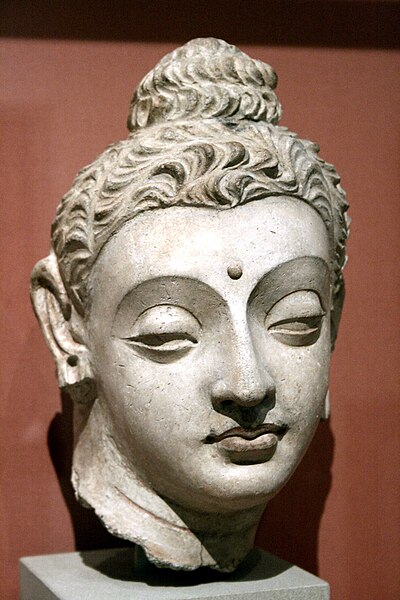
The Decline of Buddhism In India


The Chinese pilgrim Hiuen Chuang (830 A.D.) saw images that had sunk into the damp Indian soil, and was told local prophecies to the effect that thereligion of the Teacher would vanish completely when the image had sunk out of sight altogether. Shashanka, king of Bengal who had systematically destroyed Buddhist religious structures, cut down and burned the sacred tree at Gaya under which the Buddha had attained enlightenment twelve centuries earlier.

The tree was soon nursed back to growth from a sprout discovered by Purnavarman, the last descendant of Ashoka. Harsha repulsed Shashanka, restored the devastated Buddhist foundations, and built many new ones. Monasteries by the thousand still housed and fed a vast army of monk. The richly endowed University of Nalanda was at the zenith of its fame. All seemed well.

The real damage came from within, and may be discerned in the report of the same Chinese traveler, though he was perhaps not conscious of what his words signified: “(The Buddhist scholar who) can explain three classes (of sacred texts) has allotted to him different servants to attend and obey him....He who can explain five classes is then allotted an elephant carriage. He who can explain six classes of books is given a surrounding escort.... If one of the assembly distinguish himself (in disputations) by refined language, subtle investigation, deep penetration, and severe logic, then he is mounted on an elephant covered with precious ornaments, and conducted by a numerous suite to the gates of the abbey. If, on the contrary, one of the disputants breaks down in his argument, or uses poor and inelegant phrases, or if he violates a rule in logic, they proceed to disfigure his face with red and white, and cover his body with dirt and dust, and then carry him of to some deserted spot or leave him in a ditch. Thus they distinguish between the meritorious and the worthless, between the wise and the foolish.”


This was surely not the way merit had been judged in the days of the Buddha. The original function of the ever-wandering almsmen had been to explain the way of righteousness to all, in the simplest possible words, and the languages of the common people. The new class of disputatious residents of wealthy monasteries cared nothing for the villagers whose surplus product maintained them in luxury. The original rules laid dorm and followed by the Buddha had permitted only the mendicant's trifling possessions without even the touch of gold, silver or ornaments. The Buddhas of Ajanta are depicted wearing jewelled crowns, or seated upon the costliest thrones. 

Similarly, the old Buddhism had turned Ashoka away from war to the path of peace. His edicts state that the army would henceforth be used only for spectacles and parades. The devout emperor Harsha, on the other hand, managed to reconcile war with Buddhism just as he reconciled hip worship of the Sun god and Maheshwar. Harsha's army increased during thirty years of constant, aggressive warfare, to 64000 elephants, 104000 cavalry, and a still larger number of foot soldiers. He was Buddhist enough to forgive the assassin whom he had disarmed, when the assembled kings and nobles demanded the death punishment. The common people, who had to pay for his wars and for the triumphal pageantry, might have preferred his putting the assassin to death and idling less people on fewer battlefields.

In a word, Buddhism had become uneconomic. The innumerable monasteries and their pampered inmates were a counterpart of the costly military establishment. Buddhism had, from the very beginning, favored the growth of a universal monarchy, which would stop petty warfare. The Buddha is chakkravartin, spiritual counterpart of the emperor. But such great, personally administered empires had themselves become uneconomic; Harsha's was about the last of the sort in India. Thereafter, kingdoms were much smaller till feudalism from below gave the state a new basis of feudal landowners. The administration gradually drifted into the hands of a feudal hierarchy growing from below with new (feudal) property rights in land.
Ruins of Nalanda University
The village defeated both the empire and the organized religion that accompanied it. The self-contained village was hereafter the norm of production. Taxes had to be collected in kind, and consumed locally, for there was not enough trade to allow their conversion into cash. Transport of grain and raw material over long distances would have been most difficult under medieval Indian conditions. Harsha traveled constantly with court and army, through his extensive domains. The Chinese pilgrim states that Indians rarely used coins for trade, which was conducted by barter. This seems confirmed by the absence of coins struck by Harsha, which contrasts with the tremendous hoards of punch-merited coins that had circulated under the Mauryans.

Buddhism owed its initial success precisely to its fulfillment of a great social need. Society in the Gangetic basin of the 8th century B.C. was not organized into peaceful villagers producing mostly for themselves. The much thinner population was divided into a set of warring semi-tribal principalities and some tribes not yet on the level of agrarian production with the plough. Vedic Brahminism and tribal cults were fit only for the pastoral tribe at war with all neighbors. The Vedic animal sacrifices were far too onerous for a developing agrarian economy. The thin pre-Mauryan settlement required trade in metals, salt, and cloth over long distances, which could not be conducted without the protection of a powerful state. The passage from a group of tribes to a universal society, therefore, needed a new social philosophy.

That the universal monarchy and the religion of the universal society were parallel is proved by the rise of both in Magadha, at about the same time. Not only Buddhism, but also numerous other contemporary Magadhan sects preached about the same thing: the Jains, Ajivikas, and others all denied the validity of Vedic sacrifice, and the need for killing. Buddhism accompanied and protected the first traders into wild country, peopled by savage tribes. This is shown by the ancient monuments at Junnar, Karle, Nasik, Ajanta, and elsewhere on the junctions of primitive trade routes.

The major civilizing function of Buddhism had ended by the seventh century A.D. The ahimsa doctrine was universally admitted, if not practiced. Vedic sacrifices had been abandoned except by some rare princeling whose revivalist attempt had little effect upon the general economy. The new problem was to induce docility in the village cultivators, without an excessive use of force. This was done by religion, but not by Buddhism The class structure in the villages appeared as caste, always scorned by the Buddhists. Primitive tribesmen were enrolled as new castes. Both tribesman and peasant relied heavily upon ritual, which the Buddhist monk was forbidden to practice; ritual remained a monopoly of the Brahmin.

Moreover, the Brahmin at that time was a pioneer who could stimulate production, for he had a good working calendar for predicting the times of ploughing, sowing, and harvest. He knew something of new crops, and trade possibilities. He was not a drain upon production as had been his sacrificing ancestors, or the large Buddhist monasteries. A compromise could also be affected by making the Buddha an avatara of Vishnu. So formal Buddhism inevitably faded away.

Its main lesson need never be lost: that good thoughts require cultivation and training of the mind by the individual's personal efforts, no less carefully than good singing that of the voice or craftsmanship that of the hand. The value of the thoughts, on the other hand, is to be judged by the social advance, which they encourage.


Author's Note: From the Times of India, May 24, 1956, by kind permission of the editor; the title has been changed from “Buddhism in history” and minor corrections made. The topic may be pursued further, by those interested, in my book: Introduction to the Study of Indian History (Bombay, 1956).

Courtesy: Exasperating Essays, People’s Publishing House, New Delhi

Science versus Miracle: Assorted Miracles in Temples

B Premanand

At Tirupurakundram in Tamilnadu, two eagles come to the temple exactly at 12 noon to partake in the prasad offering of the god in the temple. Garuda is believed to be the vahana (vehicle) of Vishnu whose idol is installed in the temple.

Experiment: 124

Courtesy: Wikipedia
Effect: Eagle appearing at 12 noon in a temple.

In 1945, I visited the temple to see this miracle. It was found that these two eagles, after being caught, were given food exactly at 12 noon at the temple premises. The food contained opium and thus they became addicted. Later, after verification that they had become addicts, they were let free and every day at 12 noon they came back to the temple to eat the drugged food.


Experiment: 125

Effect: Natural gas burning without the crude oil catching fire.

At Jwalamukhi temple in Himachal Pradesh, natural gas burns without the boiling crude oil catching fire.

While at Shimla, I was cornered by a scientist who explained to me a miracle at Gorakhnath Dibba in the Jwalamukhi temple. This temple is constructed on the natural gas outlet which comes through a pipe and it bums constantly. So the goddess there is named Jwalamukhi.

Inside the temple there is the Gorakhnath Dibba. Here, in a well, one can see boiling oil and the natural gas escaping from it. The Gorakhnath Panthi lights this gas. When devotees come to the spot to see the miracle, and surprisingly the boiling crude does not catch fire. If the devotees place money m the plate, they sprinkle the oil on the heads by taking the boiling oil in their hands which turns cold. The scientist told me that he had visited the temple several times and can vouch for truthfulness of this miracle.

While at Jwalamukhi, I made it a point to visit the temple. Bubbles were coming out of the liquid in the well. The priest lit a piece of paper and kept it above the liquid and immediately the gas started burning. Later he splashed the liquid in the well over the fire and it got extinguished. Then he put his hand in the bubbling liquid and sprinkled the contents over the heads of the devotees who had put money in the plate. When he was sprinkling the liquid, I stealthily dipped my finger in the liquid and found it to be icy cold. It was not crude oil, but water! The natural gas passes through the water from the left side of the well and when it escapes bubbles in the water make people believe that it is boiling oil! The water being contaminated has turned so heavy that it looks like crude oil.

Experiment: 126

Effect: Lashing with a whip without getting hurt.

In Kali temples, the oracle, when possessed by the goddess, is lashed with a whip and is not hurt at all. When other try to take the whip lashes, their skin is pealed off.

Props: A jute thread whip, thick at the top handle-side and thinning down at the other end, made by plaiting the threads like a pony tail.


Method: If the whip is plaited properly to the very end, and a person is lashed by that whip, only a sound is heard but it causes no pain. But when a knot is tied at the farthest end and a person is beaten, the skin will peel off at the place where the knot touches the skin.

Share

Twitter Delicious Facebook Digg Stumbleupon Favorites More